Packaging Specialists
Packaging | Healthcare | Moulding

How to Find the Best Clamshell Boxes in China?

Finding the best clamshell boxes in China requires more than comparing factory prices. The right supplier must balance protection, visibility, production consistency, and responsible material choices. A clear window is useful, but weak hinges or uneven sealing can quickly damage the customer experience.

Smithers reported that the global packaging market was valued at more than US$1 trillion, showing the scale and competition of this industry. Grand View Research also identifies growing demand for transparent and lightweight plastic packaging in retail. These figures matter, but they do not prove that every Chinese manufacturer can meet your requirements. Samples, factory records, and independent testing still matter more.

Packaging World editor Anne Marie Mohan has said, “Packaging is part of the product experience, not merely a container.” This principle is especially important for clamshell boxes. A reliable supplier should explain resin selection, mold accuracy, wall thickness, sealing strength, and recycling options. Ask for production samples. Inspect the hinge movement. Check whether the edges feel sharp or brittle.

Small details reveal large problems.

China offers impressive manufacturing capacity, yet supplier quality varies widely. This is where many buyers become careless. They focus on unit price and overlook tooling ownership, inspection procedures, lead times, and packaging for shipment. A better evaluation compares total cost, not only the quotation.

This guide examines how to assess Chinese clamshell boxes manufacturers through documentation, sampling, communication, quality control, and real production evidence. Some recommendations may not fit every product. That limitation deserves attention. A food package, electronics pack, and retail display pack need different specifications.

How to Find the Best Clamshell Boxes in China?

What Are Clamshell Boxes and Why Choose China as a Source?

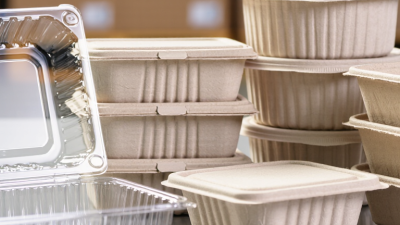
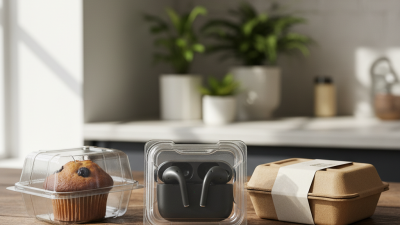
Clamshell boxes are protective packages with two connected sides that close around a product. Some use clear molded plastic, while others use paperboard or rigid board with a hinged design. Their shape keeps small items visible, secure, and easy to display. They also reduce movement during shipping. However, a clamshell is not automatically the best choice. Material thickness, hinge strength, opening comfort, and end-of-life disposal all need careful review.

China is a practical sourcing location because its packaging industry combines material suppliers, mold workshops, printing facilities, and assembly teams. This connected network can support prototypes and larger production runs. Buyers can compare paper textures, window films, closure systems, and printing finishes from one supply base. My experience is that a factory sample often looks excellent, yet the hinge may weaken after repeated testing. Small details matter. Request physical samples, measure internal clearance, and test stacking, moisture exposure, and opening cycles. Ask for material specifications and quality records. Verify that packaging meets the destination market’s safety and recycling requirements.

Tips: Start with a simple structure. Confirm the product dimensions before requesting prices. Check whether the supplier can control color consistency across batches. Ask for a pre-production sample, not only a digital drawing. Review the packaging after transport simulation. A cheaper unit price can become expensive when damaged boxes create returns. It is also wise to discuss minimum order quantities, lead times, replacement policies, and inspection procedures in writing. Mistakes still happen, so leave room for one design revision.

How to Define Your Clamshell Box Requirements

How to Define Your Clamshell Box Requirements

When sourcing clamshell boxes in China, define the package before comparing suppliers. Start with the product dimensions, including length, width, height, and tolerance. Add at least 2–3 millimeters of clearance for easy loading. Then decide whether you need paperboard, PET, recycled plastic, or a hybrid structure. Each option affects clarity, rigidity, cost, and recycling claims.

Specify the opening style carefully. Hinged lids suit retail displays, while sealed edges provide stronger tamper evidence. State the required closure force and whether workers will open boxes manually. Include printing details, such as colors, barcode position, coating, and artwork format. Smithers’ 2024 packaging outlook projects the global packaging market will exceed 1.2 trillion US dollars by 2028. That growth increases material choices, but it also makes supplier claims harder to verify.

Shipping conditions need equal attention. Provide the packed product weight, carton quantity, stacking height, and destination climate. Ask for drop, compression, and vibration testing before approving mass production. ISO 2248 and ISO 12048 offer useful testing references for packaged products. Do not rely only on a glossy sample. A sample can hide weak hinges or inconsistent seals. Request material certificates, production photos, and an inspection plan. The first specification is rarely perfect. Recheck it after a pilot run, especially if workers report slow loading or damaged corners. Small changes can prevent expensive tooling revisions.

How to Find the Best Clamshell Boxes in China? - How to Define Your Clamshell Box Requirements

Before contacting Chinese packaging suppliers, define a clear technical envelope for your product. The chart below provides practical starting ranges for common clamshell box requirements. Confirm the final dimensions, material, sealing method, and testing criteria with your supplier.

How to use this chart: Measure the product first, then add sufficient clearance for protection, inserts, and opening tolerance. Use the selected ranges as an RFQ baseline rather than a fixed standard, because the final specification depends on product weight, shape, transport conditions, and packaging equipment.

How to Evaluate Chinese Clamshell Box Manufacturers

How to Evaluate Chinese Clamshell Box Manufacturers

Evaluating Chinese clamshell box manufacturers requires more than comparing quotations. Request factory videos, production records, and recent inspection reports. Check whether the supplier controls thermoforming, trimming, sealing, and final inspection in-house. A glossy sample can still hide weak hinges or uneven edges. Ask for material certificates showing resin type, thickness, recycled content, and batch traceability. The OECD Global Plastics Outlook reports that only 9% of plastic waste was recycled globally in 2019. Therefore, material claims need evidence, not attractive wording.

Quality systems deserve careful review. ISO’s 2023 survey recorded more than one million ISO 9001 certificates worldwide, but certification alone does not prove daily control. Ask for the certificate scope and audit date. Then inspect incoming-material checks, mold maintenance, dimensional testing, and defect records. Request samples from three production batches.

Test hinge movement, sealing strength, drop resistance, and stacking performance. The Sustainable Packaging Coalition notes that packaging design strongly affects recyclability, so confirm whether the chosen plastic structure can enter your target recycling system. I would not trust one perfect sample.

Tips: Visit the factory when possible. Compare its machines with the promised capacity. Confirm tooling ownership, minimum order quantity, lead time, and replacement terms in writing. Ask who pays when dimensions drift. Keep a signed golden sample. Small details matter. Also, allow time for one failed trial; real production is rarely as smooth as the sales presentation.

How to Compare Materials, Quality, Prices, and Certifications

How to Find the Best Clamshell Boxes in China?

Choosing clamshell boxes in China requires more than comparing quoted prices. Start with the material. PET offers clear visibility and good stiffness, while PP handles heat better and bends without cracking. RPET may support sustainability goals, but its clarity and consistency require careful testing. Ask for the exact thickness, recycled content, and material datasheet.

Quality appears in small details. Check hinge alignment, edge smoothness, locking strength, and surface clarity. Request samples made with the same mold and material as mass production. A drop test can reveal weak corners quickly. Measure several pieces, not just one. Tolerances may vary between batches. That matters.

Price comparisons should include tooling, setup fees, minimum order quantities, packaging, shipping, and expected defect rates. A low unit price may hide thinner sheets or unstable production. Certification checks also need discipline. Request current factory certificates, product test reports, and documents covering the correct material and application. ISO 9001 reflects a management system, not automatic product quality. For food-contact packaging, request applicable migration and safety testing for your target market. Certificates can be genuine but irrelevant. That mistake is common. A written inspection standard, retained samples, and pre-shipment checks create stronger evidence than promises alone. Weigh convenience against risk; the cheapest supplier is not always the least expensive choice.

How to Find the Best Clamshell Boxes in China? — Comparing Materials, Quality, Prices, and Certifications

Practical comparison for sourcing clear or semi-clear clamshell packaging from China

Material Typical Applications Clarity & Appearance Performance & Quality Factors Typical Unit Price
(USD)
Indicative MOQ Recyclability / Sustainability Relevant Compliance Documents Best Use Case
PET Electronics accessories, toys, hardware, stationery, bakery and food products Excellent transparency, glossy surface, strong product visibility Good impact resistance and dimensional stability. Check wall thickness, hinge fatigue, edge sharpness, sealing strength, and drop-test results.
Overall: Excellent
$0.08–$0.25 5,000–20,000 pieces Widely recyclable where PET collection and sorting systems exist. Post-consumer recycled content may be specified separately. EU 10/2011 FDA 21 CFR 177.1630 GB 4806.7 General-purpose transparent packaging requiring a strong balance of appearance, protection, and cost
RPET Retail packaging, food packaging, promotional items, products requiring recycled-content claims Good to very good clarity; may have a light gray or blue tint depending on recycled feedstock Performance depends heavily on recycled flake quality, filtration, drying, and blend ratio. Request recycled-content verification and migration testing for food contact.
Overall: Very Good
$0.10–$0.30 10,000–30,000 pieces Uses recycled PET and can generally enter PET recycling streams. Recycled-content percentage should be stated and verified. EU 10/2011 FDA recycled-content conditions GB 4806.7 Recycled-content test Packaging projects with measurable recycled-content or sustainability requirements
PVC Low-cost retail displays, small accessories, stationery and non-food promotional packaging High clarity and easy surface printing; can be made rigid and glossy Good rigidity and low cost. Confirm plasticizer type, odor, heavy-metal restrictions, cold-temperature performance, and suitability for the intended product.
Overall: Good
$0.06–$0.18 5,000–20,000 pieces Recycling is less widely available than PET or PP. PVC should not be selected solely on the basis of low price when end-of-life requirements are important. EU REACH RoHS where applicable Food-contact rules only if specifically qualified Cost-sensitive non-food packaging where high clarity and printability are priorities
PP Food containers, cosmetics, household goods, medical accessories and products exposed to flexing Usually translucent or semi-clear; clear grades are available but less glass-like than PET Excellent chemical resistance, good hinge durability, and better heat resistance than PET. Verify transparency, sealing temperature, and warpage control.
Overall: Excellent
$0.09–$0.28 5,000–20,000 pieces Recyclable as polypropylene where suitable collection systems exist. Recycled content may reduce clarity and should be specified in advance. EU 10/2011 FDA 21 CFR 177.1520 GB 4806.7 Packaging requiring flexible living hinges, chemical resistance, or moderate heat resistance
PLA Short-life promotional packaging, specialty products and packaging marketed for industrial composting Clear and glossy, although it may become brittle under heat or long storage conditions Good appearance but lower heat resistance and impact toughness than PET or PP. Confirm shelf-life, storage temperature, and compostability conditions.
Overall: Moderate
$0.14–$0.40 10,000–30,000 pieces Industrial compostability is possible only when the finished product and process meet the applicable standard. It is not automatically home-compostable or recyclable with PET. EN 13432 ASTM D6400 Food-contact approval by market Projects with verified industrial-composting infrastructure and a clearly defined end-of-life claim
Purchasing notes: Price ranges are indicative China export prices for standard clear clamshell formats, generally based on factory production, basic packaging, and medium-volume orders. Actual pricing varies according to dimensions, material thickness, mold charges, printing, inserts, closure design, order quantity, packing method, and shipping terms. Before placing an order, request a physical sample, material specification, thickness report, dimensional inspection record, drop or compression test results, migration test where applicable, and valid certification for the destination market. A certification is relevant only when it covers the exact material, colorant, adhesive, coating, and intended use of the finished packaging.

How to Verify Samples, Production, and Shipping Details

When sourcing clamshell boxes in China, verify the sample before discussing volume pricing.

Ask for a sealed, production-like sample, not a digital mock-up. Measure length, width, depth, board thickness, folding accuracy, and closure strength. Photograph every edge beside a ruler. Compare the approved color with a physical reference under daylight and warehouse lighting. The Future of Packaging to 2028 report places global packaging demand above US$1 trillion annually. Small errors can become expensive.

Request a written production sheet covering board grade, GSM, coating, inserts, glue, tolerances, and packing methods.

Require a pre-production sample from the actual line. Check five repeated units, not one beautiful sample. Inspect corner squareness, scuffing, odor, print registration, and hinge fatigue after repeated opening. Use ISO 2859-1 sampling language, with the acceptable quality limit agreed before production.

Ask for batch photos, carton counts, gross weights, and pallet dimensions.

An independent inspection should verify quantities and random cartons before release.

Shipping details deserve equal scrutiny.

UNCTAD’s Review of Maritime Transport states that over 80% of global merchandise trade by volume moves by sea. Confirm Incoterms, loading port, booking cut-off, transit estimate, moisture protection, and document responsibilities. ASTM D4169 offers a structured distribution-testing framework for stacking and handling risks.

My weak point is trusting neat photos too quickly. Photos miss hidden delamination and crushed inner corners. Open one carton during loading. Record seal numbers, container condition, and final counts.