Choosing the right clear packaging supplier in 2026 requires more than comparing catalog prices. Global buyers must examine material quality, production consistency, certification, lead times, and regional delivery performance. A transparent pouch may look simple, yet its film structure affects shelf life, sealing strength, recyclability, and transport losses.
The market remains large and increasingly accountable. Smithers’ global packaging outlook estimates that worldwide packaging demand will exceed $1 trillion during this decade, supported by food, healthcare, cosmetics, and e-commerce growth. The OECD’s Global Plastics Outlook reports that only about 9% of plastic waste was successfully recycled globally in 2019. These figures make material selection impossible to ignore. Suppliers offering PET, BOPP, PE, glass, or recycled-content solutions should explain their technical limits clearly.
Numbers can mislead.
This guide evaluates the 2026 best clear packaging suppliers through a buyer-focused lens. It considers factory experience, minimum order quantities, printing accuracy, barrier performance, food-contact documentation, and quality-control systems. It also reviews practical evidence, including sample approval, batch traceability, shipment protection, and communication after an order leaves the factory. Certifications such as ISO 9001, BRCGS, FSC, or relevant regional compliance can strengthen confidence, but certificates alone do not guarantee reliable execution. A supplier may advertise recyclable clear packaging while lacking suitable collection systems in the buyer’s market. That gap deserves attention. Supplier rankings therefore combine industry reports, published capabilities, and realistic purchasing risks, while acknowledging that pricing, regulations, and material availability can change quickly.
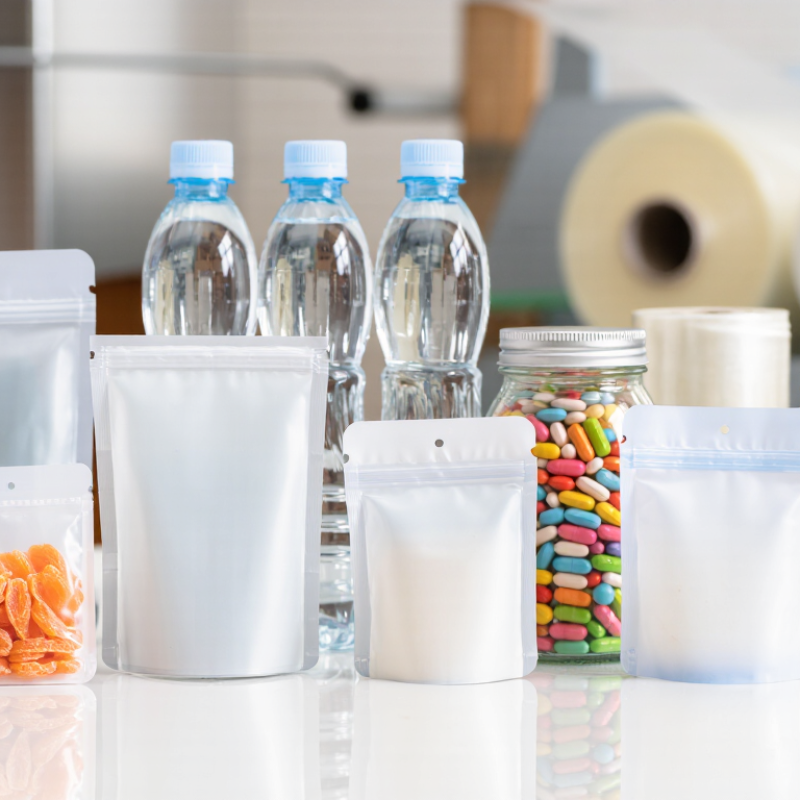
A reliable clear packaging supplier in 2026 must offer more than attractive samples. Buyers need documented resin traceability, stable clarity, and repeatable sealing performance. Small details matter. A slight haze difference can weaken shelf appeal, especially under retail lighting.
McKinsey’s 2023 packaging survey reported that packaging sustainability influences purchasing decisions for many consumers. Therefore, suppliers should provide material composition, recycled-content evidence, and end-of-life guidance. Smithers’ packaging market analysis also highlights continued growth in flexible and lightweight formats. That growth increases pressure on suppliers to control quality across larger production volumes.
Technical proof separates dependable suppliers from capable sellers. Request certificates of analysis, migration test results, seal-strength data, and drop-test records. ISO 9001-based quality systems are useful, but they do not replace factory audits. Ask to inspect a production line, not only a showroom. Lead-time records, mold ownership terms, and contingency plans also deserve attention.
No supplier performs perfectly. Data may arrive late. Samples may pass while mass production changes. That risk needs honest discussion. A practical supplier should explain tolerances, corrective-action procedures, and realistic minimum order quantities. Buyers should test filled packages under heat, pressure, transport vibration, and repeated handling before approving a contract. Clear packaging looks simple. Reliable performance is not.
| Evaluation dimension | Preferred benchmark for a reliable supplier | Why it matters to global buyers | Evidence to request | Practical rating guide |
|---|---|---|---|---|
| Material transparency | Clear PET commonly offers approximately 85–90% light transmission, depending on thickness, additives and test method. | Consistent visibility supports product presentation and helps reduce variation between production batches. | Material specification, haze or light-transmission test method, and batch-control records. | High: published test method and repeatable batch results. |
| Material selection | PET for rigid bottles and jars; PE or PP for flexible or semi-rigid formats; glass where premium appearance or high chemical inertness is required. | The correct material must match product chemistry, filling temperature, transport conditions and end-of-life requirements. | Food-contact or product-compatibility declaration, resin grade, and application-specific test results. | High: supplier explains material trade-offs rather than offering one material for every use. |
| Recycled-content capability | For clear PET, recycled content can be incorporated when the required food-contact, cosmetic or technical approvals are available. Actual percentages vary by product and regulation. | Recycled-content claims increasingly affect procurement, reporting and packaging-tax exposure. | Chain-of-custody documentation, recycled-content declaration, and applicable certification or audit records. | High: percentage, calculation method and documentation are clearly defined. |
| Barrier performance | Barrier requirements should be stated using oxygen transmission rate, water-vapor transmission rate, light protection and shelf-life targets; no universal value applies to every format. | Clear packaging may provide limited protection against oxygen, moisture or ultraviolet light unless engineered with coatings, layers or additives. | OTR and WVTR test reports, test conditions, shelf-life data and compatibility studies. | High: performance is validated under conditions relevant to the buyer’s product. |
| Dimensional consistency | Critical dimensions such as neck finish, wall thickness, height, diameter and closure fit should be controlled against an approved drawing. | Stable dimensions reduce filling-line stoppages, leakage, label misalignment and closure failures. | Technical drawing, control plan, inspection frequency, tolerance table and sample measurement report. | High: documented tolerances are measured and reported for every production lot or agreed sampling plan. |
| Leak and closure testing | Testing should cover torque, seal integrity, pressure or vacuum performance, drop resistance and transport simulation where relevant. | A visually clear package still fails commercially if it leaks, cracks or loses its closure during distribution. | Test protocol, acceptance criteria, sample size, failure records and corrective-action reports. | High: test conditions reflect the buyer’s actual filling and logistics environment. |
| Food-contact and product safety | Materials and colorants should comply with the rules applicable to the destination market and product category. | Requirements differ by region, including the European Union, United States, United Kingdom and other markets. | Declaration of compliance, migration testing, composition statement and change-notification procedure. | High: documents identify the regulation, material scope and version date. |
| Quality-management system | A controlled quality system should include incoming-material checks, process controls, final inspection, traceability and corrective action. | Documented controls make performance less dependent on individual operators or a single production shift. | Current quality certificate, audit summary, process-control plan and nonconformance procedure. | High: certificate scope covers the actual manufacturing site and product category. |
| Minimum order quantity | A reliable supplier publishes or confirms minimum order quantities separately for stock items, custom tooling and custom decoration. | MOQ directly affects inventory exposure, cash flow and the feasibility of market testing. | Written quotation showing MOQ, tooling quantity, setup charges and reorder conditions. | High: pricing and MOQ remain transparent after technical approval. |
| Lead-time reliability | Lead time should be separated into sampling, tooling, production, inspection and export-document stages. | A single headline lead time can conceal delays caused by mold approval, decoration or regulatory documentation. | Written production schedule, capacity statement, on-time-delivery history and escalation contact. | High: dates are milestone-based and updated when assumptions change. |
| Global logistics readiness | Supplier should support export packaging, palletization, carton marking, Incoterms and destination-specific documents. | Clear packaging can be lightweight but bulky, making cube utilization and breakage prevention important. | Packing specification, pallet dimensions, container-loading plan, shipping documents and damage-claim process. | High: logistics assumptions are quantified before the purchase order. |
| Sample and approval process | Samples should be traceable to the approved drawing, material specification and decoration artwork before mass production. | Approval discipline prevents production from proceeding with an unapproved appearance or fit. | Sample identification, approval form, golden sample, artwork proof and change-control record. | High: no production change is made without documented buyer approval. |
| Supply continuity | Supplier should identify alternate raw-material sources, backup equipment, safety stock options and business-continuity procedures. | Material shortages, equipment failures and trade disruptions can affect global replenishment even when product quality is acceptable. | Business-continuity plan, raw-material sourcing policy, capacity map and communication procedure for disruptions. | High: continuity plans are documented, tested and linked to realistic recovery times. |