How to Choose the Right Plastic Wraps for Global Sourcing?
Choosing the right plastic wraps for global sourcing requires more than comparing prices. Buyers must match film performance with product needs, shipping conditions, and local packaging expectations. A wrap that works well in a dry warehouse may fail inside a humid container. Small details matter.
This guide examines material type, thickness, stretchability, puncture resistance, clarity, and sealing performance. It also considers recycled content, food-contact suitability, storage life, and supplier consistency. Experienced sourcing teams usually request samples before approving large orders. They test the film around real cartons, pallets, and product surfaces. A practical trial can reveal tearing, weak adhesion, or difficult unwinding.
Supplier evaluation is equally important. Reliable manufacturers should provide clear specifications, test records, production controls, and traceable batch information. Buyers should confirm whether measurements use consistent standards. They should also review packaging marks, shipping documents, and destination-market requirements with qualified professionals. Requirements can differ widely.
Cost still matters.
However, the cheapest roll may create higher labor costs, damaged goods, or delayed shipments. A careful sourcing decision balances unit price with protection, efficiency, and supply stability. This process is not flawless. Product changes, seasonal weather, and transport routes can challenge an otherwise sound plan. Regular reviews remain necessary. By combining hands-on testing, technical questions, and documented supplier checks, global buyers can select plastic wraps with greater confidence and fewer costly surprises.
Understanding Plastic Wrap Types and Their Global Applications
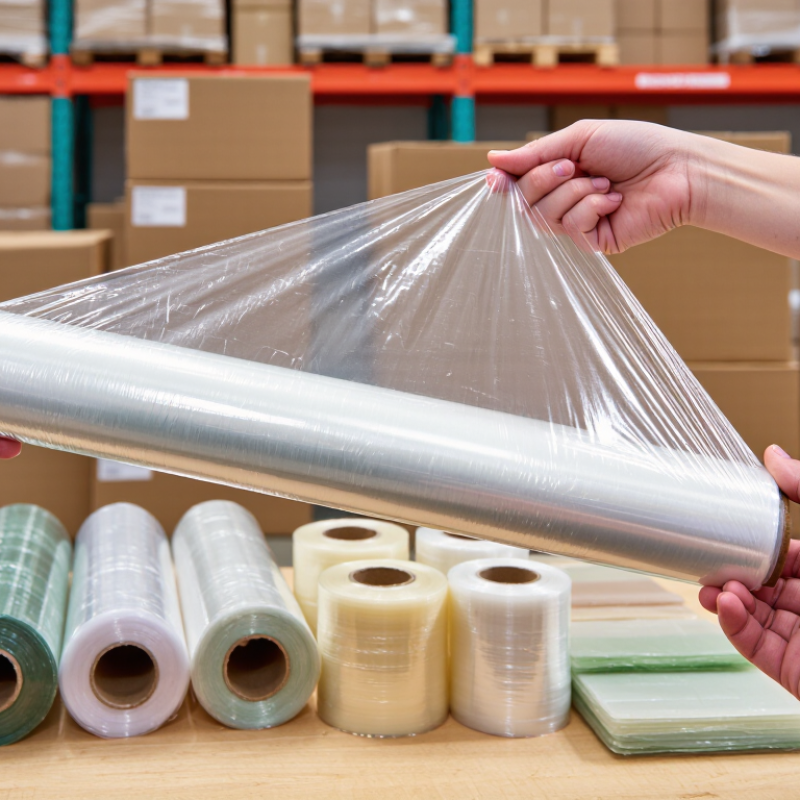
Global sourcing starts with the application, not a catalog label. LDPE and LLDPE stretch films suit pallet stabilization. They extend around uneven cartons and recover during transport. Cling films need controlled tack, clarity, and clean unwinding for food handling. PVC films offer strong cling and visibility, but destination requirements must be checked carefully. Multilayer films can improve oxygen and moisture protection. However, they may complicate recycling streams. The OECD Global Plastics Outlook (2022) reported 460 million tonnes of global plastic production in 2019. Packaging remains the largest end-use sector.
For every quotation, specify thickness, width, roll length, core diameter, tensile strength, puncture resistance, elongation, and temperature range. A 17-micron film is not automatically better than a 23-micron film. Load corners, humidity, and wrapping equipment can change performance. The UNEP report Turning off the Tap (2023) estimates that packaging represents about 36% of global plastic production. Material efficiency therefore matters beyond unit price. Ask for a certificate of analysis and samples from current production batches. Supplier data can look precise. Real loads may disagree.
Tips: Compare delivered cost per protected pallet, not price per roll. Test cold cartons, sharp edges, and long storage periods. Confirm food-contact documentation where relevant. Review import, labeling, waste, and recycling requirements in each destination market. Keep a backup specification for supply interruptions. No checklist replaces a factory trial.
Defining Packaging Requirements for Product Protection and Handling
When defining packaging requirements, start with the product’s actual journey. Note its weight, shape, surface sensitivity, and exposure to dust, moisture, or abrasion. A plastic wrap that works in a warehouse may fail during ocean transport. Record stacking height, pallet dimensions, and expected handling frequency. These details guide film thickness, stretch performance, puncture resistance, and cling. Do not choose by thickness alone. I have seen a heavier film tear faster when sharp corners were left unprotected. That mistake was preventable.
Product protection also depends on handling conditions. Specify whether workers apply the wrap manually or with powered equipment. Manual wrapping needs manageable tension and comfortable release. Machine wrapping requires consistent roll dimensions and stable elongation. Define the number of layers, overlap percentage, and wrapping direction for each load. Clear requirements reduce loose tails, crushed cartons, and unstable pallets. They also make supplier samples easier to compare. Ask for test data, but verify it with a small trial using your real cartons. Laboratory results can look convincing.
Handling requirements should include storage and removal. State the acceptable temperature range, humidity exposure, and maximum storage period. If labels or printed cartons must remain readable, check clarity and residue after removal. Confirm roll core size, roll weight, and packaging for clean delivery. A practical inspection sheet can track tears, slipping, blocked visibility, and operator effort. Leave room for revision. Early specifications are rarely perfect, especially when packaging meets a new route or product shape. Document failures honestly, then adjust the requirement before placing a larger order.
Film thickness should be matched to product weight, edge sharpness, handling frequency, and transport conditions. These reference specifications reflect common sourcing ranges for polyethylene stretch and protective wrapping applications. Validate the final specification through load testing and applicable ASTM or ISTA procedures.
Comparing Materials, Performance, and Regulatory Compliance
Choosing plastic wrap for global sourcing requires more than comparing price and thickness. Low-density polyethylene (LDPE) offers flexibility and moisture resistance, while high-density polyethylene (HDPE) provides greater stiffness and puncture resistance. Polyvinyl chloride can cling effectively, but its additives and regional restrictions require closer review. Compostable films may support specific waste systems, yet they often need controlled industrial composting.
Performance should be tested, not assumed.
Suppliers can report tensile strength using ASTM D882, oxygen transmission using ASTM D3985, and water-vapor transmission using ASTM F1249. A thin film may look efficient, but stretching during pallet wrapping can create weak corners and product loss. In practical sourcing trials, I would test rolls in cold storage, humid warehouses, and long-distance transport. Laboratory results alone can mislead.
Regulatory evidence must match the destination market. Food-contact materials may require compliance with United States FDA rules, European Regulation (EU) No 10/2011, or applicable national standards such as China’s GB 4806 series. Migration testing, substance declarations, traceability, and recycled-content documentation should travel with every shipment. The OECD Global Plastics Outlook reported 353 million tonnes of plastic waste in 2019, with only 9% recycled. That figure makes end-of-life planning commercially relevant, not decorative. I still see sourcing teams treating compliance files as paperwork completed after production. That approach is risky. Suppliers should provide current test reports, batch controls, and clear limits for temperature, food contact, and reuse.
Planning Costs, Logistics, and Sustainable Sourcing Decisions
Choosing plastic wrap for global sourcing starts with the delivered cost, not the factory price. A thinner film may reduce material spending, yet it can increase punctures, product loss, and repacking labor. Build a landed-cost sheet covering resin, conversion, tooling, inspection, insurance, duties, storage, and port handling. UNCTAD reports that maritime shipping carries over 80% of global merchandise trade by volume. A delayed container can therefore disrupt more than one purchase order.
Set measurable packaging requirements before requesting quotations. Specify thickness tolerance, roll length, core size, tensile strength, cling, and permitted recycled content. Request test samples from the same production line used for shipment. Small details matter. A 500-meter roll with inconsistent winding may create downtime on an automated packing line. The OECD Global Plastics Outlook (2022) states that global plastic waste reached 353 million tonnes in 2019, while only 9% was recycled. That figure makes material efficiency and credible recycling claims commercially important.
Sustainable sourcing also needs evidence, not attractive wording. Ask for recycled-content documentation, batch traceability, laboratory results, and clear end-of-life instructions. Compare virgin, post-consumer recycled, and multilayer structures by performance and total emissions. The International Energy Agency notes that petrochemicals will drive much of future oil-demand growth, increasing pressure to reduce unnecessary plastic consumption. A practical pilot can expose weak assumptions: the cheapest wrap may fail in humid storage, while the greener option may need thicker film. My cost models still miss occasional port charges and emergency freight. That is a reason to review them quarterly, not to ignore sustainability.