Why Choose Drawstring Trash Bags for Global Purchasing?
Global purchasing teams need waste-handling products that perform consistently across different markets. A Drawstring Trash Bag offers a practical balance of convenience, strength, and efficient packing. Its integrated closure makes bag removal cleaner and faster. This matters in offices, hotels, warehouses, and household supply programs.
In real sourcing projects, small details often affect the final result. Buyers should compare film thickness, material composition, bag dimensions, drawstring strength, sealing quality, roll packaging, and carton protection. A heavier bag is not always the best choice. It may increase freight costs without improving performance for light waste. Sampling remains essential. Test the bag with realistic loads, sharp packaging edges, and repeated lifting before approving a large order.
Reliable suppliers should provide clear specifications, stable production records, and practical quality-control procedures. They should also communicate lead times, minimum order quantities, packaging options, and shipment conditions accurately. Environmental expectations deserve careful attention as well. Buyers can request material information, recycled-content details, and responsible packaging options, while checking whether claims are supported by documentation.
There is no universal bag.
A professional purchasing decision weighs use conditions, budget, transport efficiency, and customer expectations together. Even experienced teams can overlook odor control, storage humidity, or color consistency. That is why continuous review matters. With careful testing and transparent supplier communication, a Drawstring Trash Bag can become a dependable product for international distribution, rather than merely a low-cost disposable item.
What Are Drawstring Trash Bags and How Do They Work?
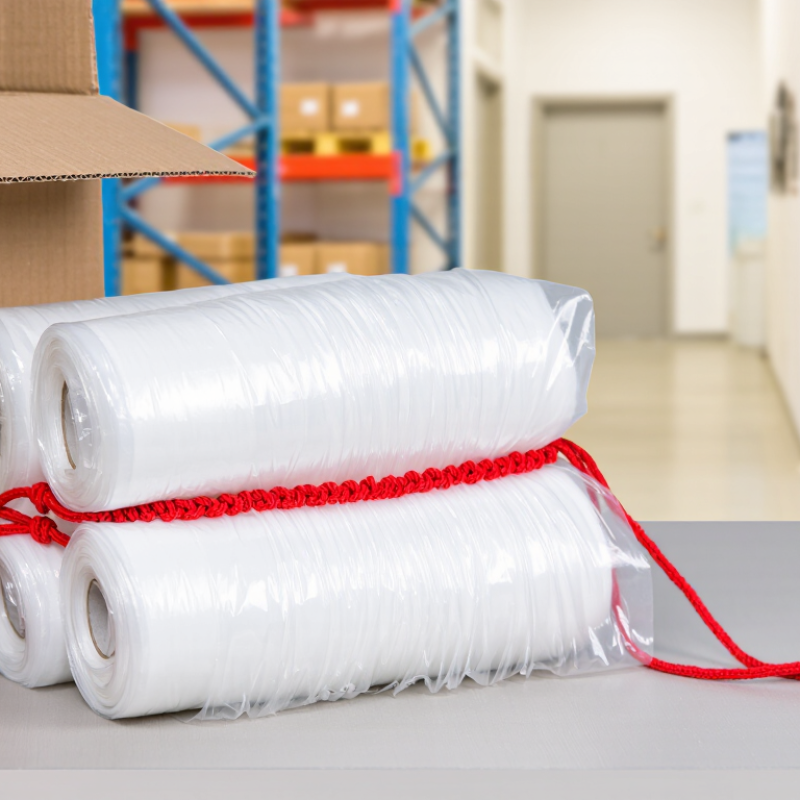
Drawstring trash bags are flexible liners designed for quick closing and clean removal. Their defining feature is a cord woven through a reinforced top hem. When the cord is pulled, the opening gathers into a secure handle. This action reduces contact with waste and helps prevent spills during carrying. The bag also fits more neatly around many bin shapes. A correctly sized liner should cover the rim without excessive folding. Small detail, big difference.
For global purchasing, buyers should check how the drawstring is attached, not only the bag’s thickness. A practical inspection includes pulling the cord several times, checking seam strength, and testing a filled sample. The cord should move smoothly without cutting into the plastic. The bottom seal must remain stable under normal household weight. A bag can look strong and still tear at the corner. That mistake is easy to miss.
Material thickness, bag dimensions, roll length, and packaging should appear clearly on the product specification. Samples should be stored in dry conditions before evaluation. Humidity and heat can affect plastic performance over time. Clear inspection records improve consistency between shipments. Drawstring bags are not perfect; extra convenience may increase material use. Purchasers should balance closure performance, waste capacity, and responsible material choices for the intended application.
Why Choose Drawstring Trash Bags for Global Purchasing?
Drawstring trash bags use integrated cords at the top of the bag. Pulling the cords gathers the opening, helping users close, lift, and transport the filled bag without touching the waste. The chart shows common nominal capacity categories used for household, office, commercial, and high-volume waste collection. Actual dimensions and load performance vary by material, thickness, and manufacturer specifications.
Key Features That Support Global Purchasing Decisions
Global purchasing teams need more than a low unit price. Drawstring trash bags offer quick closure, cleaner handling, and easier warehouse picking. These features matter when products move through different climates, labor systems, and disposal routines.
UNEP’s Global Waste Management Outlook 2024 estimates that municipal solid waste may rise from about 2.3 billion tonnes annually to 3.8 billion tonnes by 2050. This growth increases demand for dependable collection products. Buyers should compare bag capacity, film thickness, seam strength, and drawstring performance under full loads. A reinforced drawstring can reduce contact with waste and speed removal. Still, thicker film does not always mean better value. It may increase material use without improving real-world performance.
The OECD’s Global Plastics Outlook reports that global plastic waste reached 353 million tonnes in 2019. Its data supports careful material selection and clearer end-of-life planning. Purchasing specifications should identify resin type, recycled content, packaging format, and carton dimensions. Consistent bag sizing also improves pallet utilization and inventory forecasting. Independent testing for tensile strength, leak resistance, and odor control adds useful evidence. Ask for test conditions, not just pass claims. Some suppliers provide strong laboratory results, but field performance can differ. That gap deserves review. Regional waste systems also vary, so one universal specification may be unrealistic. Procurement teams should test samples with actual liners, bins, and handling methods before placing large orders.
How to Evaluate Suppliers, Costs, and Shipping Requirements
Why Choose Drawstring Trash Bags for Global Purchasing?
How to Evaluate Suppliers, Costs, and Shipping Requirements
A drawstring bag offers faster tying, cleaner handling, and fewer spills during collection. These details matter in offices, hotels, and municipal facilities. The World Bank’s What a Waste 2.0 report estimates that global municipal waste may reach 3.40 billion tonnes annually by 2050. Buyers should therefore assess capacity, not only appearance.
Ask suppliers for resin specifications, bag dimensions, film thickness, tensile strength, and tear resistance.
Independent testing is more reliable than a polished sample. Samples can mislead.
Cost evaluation should use landed cost, not the factory price alone. Include tooling, quality inspection, inland transport, ocean freight, insurance, duties, and warehouse handling.
Request a clear quotation with currency, payment terms, minimum order quantity, and validity period.
A thinner film may reduce cost, but it can increase leakage and replacement expenses. That calculation is often missed. Compare cost per usable bag, not cost per carton.
The ASTM D882 and D1709 methods can support checks for tensile properties and impact resistance, where applicable.
Shipping plans need practical measurements.
Confirm carton size, gross weight, pallet pattern, loading limits, and delivery port before ordering. UNCTAD’s Review of Maritime Transport 2023 states that over 80% of global merchandise trade by volume moves by sea.
Freight delays can damage cash flow, especially with seasonal demand. Share a forecast, allow realistic production time, and verify pre-shipment inspection records.
I would not rely on one supplier quote. Markets change, and my first estimate may be wrong.
