Why Are Canteen Bottles Popular with Global Buyers?
Across many markets, buyers look for drinkware that feels sturdy, travels easily, and suits daily routines. A Canteen Bottle can meet that need through a practical shape, secure closure, and reusable design. The details matter. A bottle that fits a backpack side pocket, opens without fuss, and rinses clean can earn repeat use. For retailers and distributors, that combination may support demand across school, office, outdoor, and promotional settings.
Yet buyer preferences differ. Some prioritize stainless steel and insulation; others value lightweight construction, color choices, or a lower purchase price. A familiar silhouette helps, but quality is not guaranteed by appearance. Buyers should check capacity, lid fit, surface finish, cleaning access, and product specifications before placing large orders. This is where comparisons help.
Global interest also reflects gifting and branding options: a logo, restrained color palette, or customized packaging can make a bottle feel relevant. But customization can add lead time and cost. That trade-off deserves attention. Reliable suppliers provide clear material information, realistic production schedules, and samples that match the final order. These checks are more useful than broad promises. Still, no single bottle suits every user. A narrow mouth may complicate cleaning; a bulky design may stay home instead of traveling. Even popular products have limits. The strongest buying decisions balance appearance with comfort, durability, maintenance, and verified specifications. This guide explores why the Canteen Bottle continues to attract global buyers, and what they should examine before choosing one.
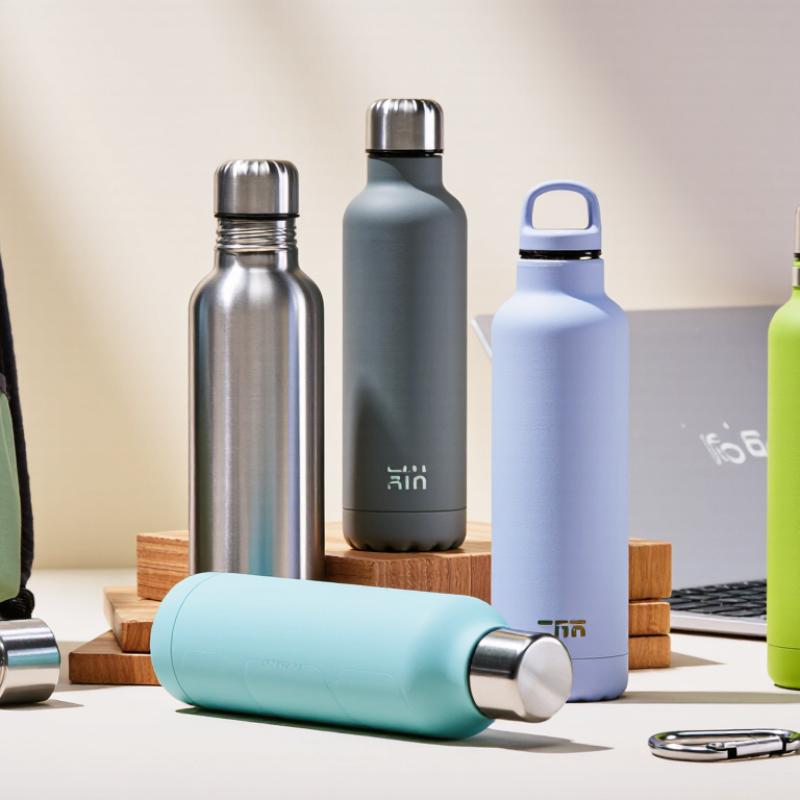
Canteen Bottles Defined: Reusable Drinkware for Work, Travel, and Outdoor Use
Canteen bottles are reusable drinkware designed to carry water and other everyday drinks. Their sturdy, often narrow shape fits easily into a work bag, car cup holder, or backpack side pocket. Depending on the design, they may use stainless steel, aluminum, or durable plastic. Some have insulated walls to help keep drinks warm or cool, while simpler models suit room-temperature water. A secure lid helps prevent spills, though it is still wise to check the seal before packing one beside a laptop. Small details matter.
Tips: Match the bottle to your routine. Check its capacity, opening size, and cleaning instructions before buying. A wide mouth makes adding ice and washing easier. For outdoor use, choose a shape that sits steadily on uneven ground.
At work, a refillable bottle can reduce the need for disposable drink containers. On a trip, it keeps water close during train rides, walks, or long airport waits. But convenience depends on upkeep: lids and seals need regular cleaning and complete drying. Bottles can also feel heavy when full, and insulated designs may take up more space than expected. There is no perfect option for everyone; the best fit depends on where you carry it and how often you can wash it.
Material Appeal: 304 Stainless Steel Is Commonly Known as 18/8 Steel
A canteen bottle’s appeal often starts with its material. 304 stainless steel is commonly called 18/8 steel because it contains roughly 18 percent chromium and 8 percent nickel. These elements help the steel resist corrosion during ordinary use. They also make it suitable for repeated washing and daily carrying. For buyers, that can mean a bottle that feels sturdy without needing delicate handling.
The benefit is practical.
A cool metal surface, a solid rim, and a bottle that does not easily retain yesterday’s drink can make a difference on a commute or hike. Small details matter. Still, 304 steel is not rustproof under every condition, and “18/8” is not a promise of perfect quality. Scratches, prolonged dampness, and poor cleaning can affect any bottle over time. The lid and inner seams deserve attention too; the steel grade alone does not describe the whole product. Buyers can check whether material details are clearly stated and follow the maker’s care instructions. That extra check is easy to overlook, even by careful shoppers.
Insulation Design: How Double-Wall Vacuum Construction Supports Temperature Retention
Why Are Canteen Bottles Popular with Global Buyers?
A double-wall vacuum bottle uses two steel walls with most air removed from the space between them. NIST reference data places air’s thermal conductivity near 0.026 W/m·K at 300 K. That figure describes air, not a finished bottle, but it helps explain why limiting gas movement matters. Vacuum construction reduces heat transfer through gas conduction and convection. Reflective inner surfaces can also reduce radiant heat transfer, as described in the ASHRAE Handbook—Fundamentals. Small gap. Big effect.
Still, vacuum is not magic. Heat can travel through the neck, lid, and solid connections between the walls. A loose cap or frequent opening can also reduce temperature retention. In daily use, that means a bottle may keep tea warm during a commute yet cool faster when its lid is repeatedly removed. Performance depends on the bottle’s geometry, seal, fill level, and starting temperature. These details are easy to overlook.
Tips: Pre-warm the bottle with hot water before filling it, and tighten the lid fully. For cold drinks, chill the bottle first. Check the neck and seal, too; insulation has limits, and real-world results may differ from test conditions.
Why Are Canteen Bottles Popular with Global Buyers?
Insulation Design: How Double-Wall Vacuum Construction Supports Temperature Retention
How to read this: The chart compares the basic construction components shown in each bottle design. A double-wall vacuum bottle has an inner wall, an evacuated gap, and an outer wall. The vacuum gap reduces heat transfer by conduction and convection; this is a structural comparison, not a measured temperature-retention test.
Hydration Needs: NASEM Recommends 2.7–3.7 L of Total Water Daily for Adults
NASEM’s Dietary Reference Intakes set adequate total-water intakes at 2.7 liters daily for adult women and 3.7 liters for adult men. These figures include water from drinks and food, not just plain water. The report estimates that food supplies about 20 percent of total intake for many people, though diets differ. That matters. A canteen bottle offers a visible, refillable way to keep water nearby during commuting, work, or outdoor activity. Still, a number is not a personal prescription. Heat, exercise, health, and diet can change individual needs.
For global buyers, that practical role helps explain the appeal of canteen bottles. A sturdy bottle can sit beside a laptop, fit into a day bag, or travel between refill points. People can also track refills more easily than scattered cups. NASEM’s figures come from its 2005 Dietary Reference Intakes report, an authoritative reference for U.S. and Canadian intake guidance. They are population-level adequate intakes, not a daily quota everyone must force themselves to meet. That distinction is easy to miss. Bottle capacity, lid design, and ease of cleaning matter too, because a bottle only supports hydration when people actually carry and use it.
Global Buyer Priorities: Durability, Portability, Reuse, and Food-Contact Safety
Canteen bottles appeal to global buyers because they solve ordinary, repeated problems. They carry water, help prevent spills, and support repeated use. A bag may be crowded, a bicycle ride bumpy, and a workbench unforgiving. A dent-resistant body, secure cap, and practical loop can make transport easier. Small details matter. Yet durability should not mean unnecessary weight; a bottle that feels like a tool may stay home. That trade-off deserves honest testing with filled bottles, not just attractive product photos.
Reuse also depends on cleaning. Wide openings, smooth interiors, and removable seals make routine washing easier. Still, a removable seal can be misplaced. Food-contact safety needs more than a broad label. Buyers should request material specifications and test documentation for intended beverages, temperatures, and cleaning methods.
Claims alone are not enough. Ask how the bottle performs after repeated washing, and inspect seals for wear. Requirements can differ by market and use. No single design fits everyone.
Some buyers prioritize lightweight travel; others need a sturdy bottle for long shifts. A small uncertainty remains: real-world care varies, and even a well-made bottle can be neglected. That is worth acknowledging.
