Packaging Specialists
Packaging | Healthcare | Moulding

Top Hydraulic Steering Cylinder Companies for Global Buyers?

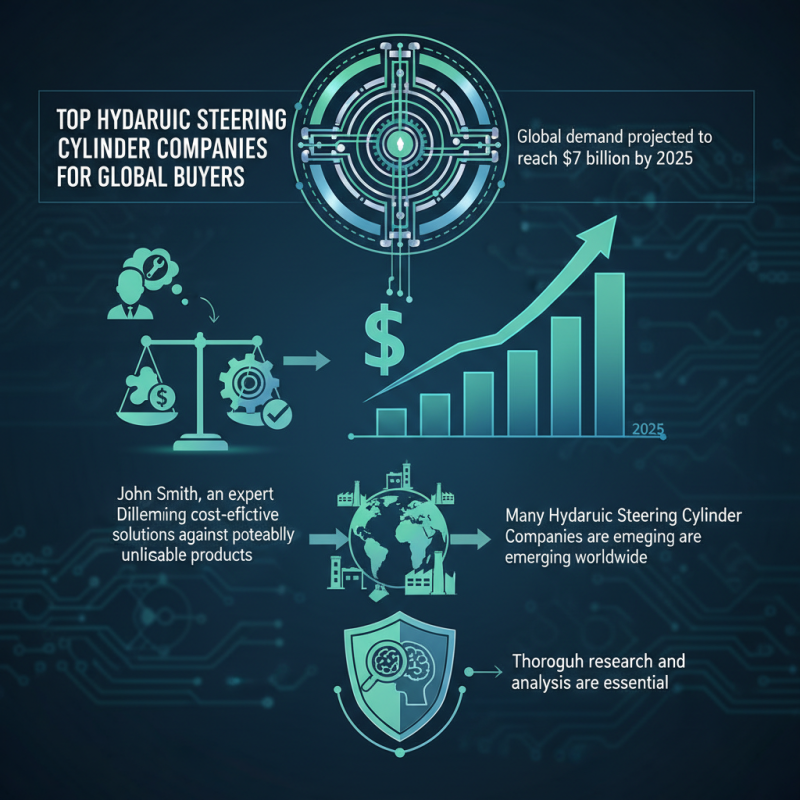
The hydraulic steering cylinder industry is vital for various sectors, including automotive and marine engineering. Global demand for these components is projected to reach $7 billion by 2025, according to a recent report from MarketsandMarkets. This growth indicates a significant opportunity for buyers seeking reliable Hydraulic Steering Cylinder Companies.

John Smith, an expert in hydraulic systems, states, “Finding the right supplier is crucial for operational efficiency.” His insights reflect the challenges in sourcing high-quality components amid rising market competition. Companies must prioritize partnerships with manufacturers known for quality and innovation.

Many Hydraulic Steering Cylinder Companies are emerging worldwide, sometimes blurring the lines between quality and price. Buyers face the dilemma of choosing cost-effective solutions against potentially unreliable products. Thorough research and analysis are essential in this dynamic market environment.
Top Hydraulic Steering Cylinder Companies for Global Buyers?

Overview of the Global Hydraulic Steering Cylinder Market Trends

The global hydraulic steering cylinder market is witnessing significant evolution. With increasing demand from various sectors, this technology is becoming more commonplace. Industries are turning to innovative solutions, enhancing efficiency and reliability. Hydraulic steering cylinders are essential for machinery, automobiles, and marine applications. Their importance cannot be overstated.

Trends reveal a push toward automation and smart technologies. Many companies are investing in research and development. They aim to produce advanced hydraulic steering cylinders that incorporate digital features. This trend may present challenges, as not every company can keep pace. The need for skilled labor and updated equipment remains a barrier for some. Compliance with standards also complicates market entry.

Sustainability is another key factor in current trends. Manufacturers are exploring eco-friendly materials and processes. This shift is crucial but not without hurdles. Companies often struggle with balancing performance and environmental impact. The focus should remain on creating durable products without compromising ecological goals. The future of the hydraulic steering cylinder market is dynamic, promising both opportunities and challenges.

Global Hydraulic Steering Cylinder Market Trends

Key Features and Specifications of Hydraulic Steering Cylinders

Hydraulic steering cylinders play a crucial role in various vehicles, enhancing maneuverability and control. These components convert hydraulic pressure into mechanical force. They are widely used in automobiles, marine vessels, and heavy machinery. The quality of these cylinders greatly affects the overall performance of the steering system.

Key features of hydraulic steering cylinders include their construction material and operational efficiency. Most are made from durable steel or aluminum, ensuring longevity. They should withstand high pressure and provide smooth steering. Specifications often highlight the bore size, stroke length, and maximum operating pressure. Each feature impacts responsiveness and strength.

When selecting a hydraulic steering cylinder, buyers should consider compatibility and lifecycle cost. A mismatch with a vehicle's system can lead to failure. Analyzing user requirements is essential, yet it is often overlooked. Attention to details, like seal quality and fluid compatibility, can prevent costly repairs. Addressing these specifics helps ensure reliability and optimal performance, fostering trust in hydraulic systems.

Top Players in the Hydraulic Steering Cylinder Industry: Market Share Analysis

In the hydraulic steering cylinder industry, understanding market players is vital. Key companies significantly influence market trends and customer preferences. These firms demonstrate a range of expertise in hydraulic system design. Their technology often focuses on enhancing steering precision and responsiveness.


Market share analysis reveals varied strength among competitors. Some firms dominate high-end applications, while others serve budget-conscious segments. This division creates a robust competition landscape. Buyers should consider the specific needs of their machinery. Product durability and efficiency often indicate a company's reputation.


Challenges exist as market dynamics evolve. Companies must adapt to new regulations and environmental considerations. Innovations in materials and designs are necessary for future growth. Buyers may find value in niche players who specialize in unique hydraulic solutions. Each player can contribute differently to the overall market, making informed decisions crucial.

Emerging Technologies and Innovations in Hydraulic Steering Systems

The hydraulic steering cylinder industry is witnessing rapid advancements. Emerging technologies enhance efficiency and control in hydraulic steering systems. Recent studies show a projected growth rate of 6% for hydraulic steering systems by 2026. This is driven by increasing demand for automation in automotive manufacturing.

Innovations such as electronic control systems are becoming commonplace. They offer precise steering adjustments and improve vehicle responsiveness. Enhanced simulation tools enable engineers to design more effective hydraulic systems. These tools help test various configurations, allowing for better performance analysis.

Despite these advancements, challenges remain. High manufacturing costs can hinder the adoption of new technologies. Moreover, integrating these innovations with existing systems often proves difficult. Companies must consider the balance between investment and efficiency. Continuous feedback from users helps refine these technologies. Stakeholders need to remain engaged with ongoing developments to ensure their systems are future-proof.

Challenges and Opportunities in the Hydraulic Steering Cylinder Sector

The hydraulic steering cylinder sector faces various challenges and opportunities. Industry reports show a projected growth rate of 5% from 2023 to 2028. However, this growth is not without its hurdles. Manufacturing efficiency remains a significant issue. Many companies struggle with the integration of advanced technologies. This can lead to increased production costs and longer lead times.

Another major challenge is the supply chain. Disruptions due to geopolitical factors and natural disasters affect availability. A report indicated that over 60% of manufacturers experienced delays in raw material procurement. On the flip side, these challenges drive innovation. Companies are exploring new materials and design techniques. Investing in smart manufacturing can yield substantial benefits. The rise of electric vehicles also presents opportunities. Hydraulic steering systems are crucial for enhancing vehicle performance and safety.

Regulatory compliance adds another layer of complexity. Each region has different standards, which can complicate global trade. Many businesses must adapt quickly to stay competitive. The sector requires a keen focus on sustainability as environmental concerns grow. Companies are starting to rethink their production processes. The demand for energy-efficient systems is steadily increasing. This shift can lead to a more resilient and innovative industry.