Packaging Specialists
Packaging | Healthcare | Moulding

Who Is the Top China Bulk Oil Storage Tanks Manufacturer?

Choosing a China Bulk Oil Storage Tanks Manufacturer requires more than comparing steel thickness, prices, or delivery dates. Storage projects must balance capacity, corrosion resistance, inspection access, fire protection, and long-term operating costs. A tank may look impressive on a factory floor. Its real quality appears after years of temperature changes, loading cycles, and difficult maintenance.

The market context is substantial. The International Energy Agency’s Oil 2024 report projects global oil demand will reach approximately 105.4 million barrels per day by 2029. Meanwhile, OPEC’s World Oil Outlook 2024 presents a much higher long-term demand outlook. These different forecasts expose an uncomfortable planning issue: storage capacity should not be designed around one optimistic assumption. It must remain useful under changing trade flows, refinery schedules, and environmental requirements.

Fatih Birol, Executive Director of the IEA, stated that “the age of seemingly unstoppable growth in global oil demand is heading towards an end.” This observation matters to tank buyers. Future competitiveness may depend less on building the largest tank and more on building adaptable systems. Experienced manufacturers should demonstrate engineering calculations, welding quality controls, coating procedures, and documented testing. They should also explain how their tanks align with standards such as API 650 and API 653, where applicable.

Some claims deserve questioning. “Low cost” is not always low cost. A cheaper coating, weak insulation detail, or delayed spare-parts support can create expensive problems later. This guide examines what separates a dependable China Bulk Oil Storage Tanks Manufacturer from a supplier that only offers attractive specifications.
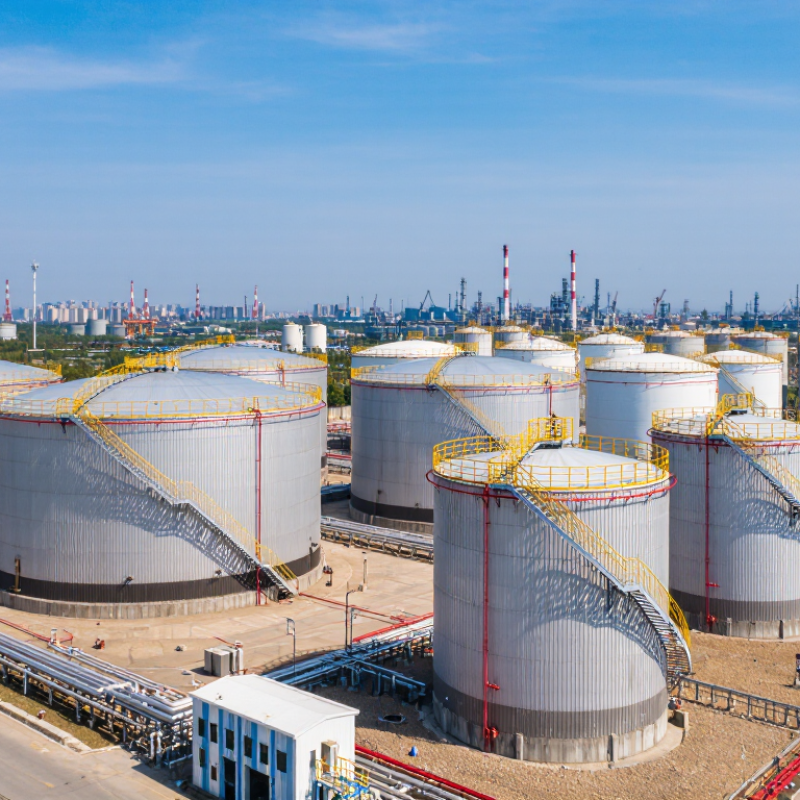
Who Is the Top China Bulk Oil Storage Tanks Manufacturer?

What Defines a Top China Bulk Oil Storage Tanks Manufacturer?

What Defines a Top China Bulk Oil Storage Tanks Manufacturer?

A top China bulk oil storage tanks manufacturer is defined by controlled engineering, not a low quotation. The IEA’s Oil 2024 report projects global oil demand to reach 105.4 million barrels per day by 2029. This growth increases pressure on storage safety, capacity, and maintenance planning. A capable manufacturer should design tanks according to recognized standards, such as API 650, ISO 28300, and applicable local regulations. Plate certificates, weld maps, heat numbers, and inspection records should follow every major component. Documentation matters.

Look closely at factory practice. Experienced teams verify plate thickness, welding procedures, dimensional tolerances, and coating adhesion. They perform hydrostatic testing, vacuum-box checks, and non-destructive examination where required. Independent inspectors can review critical stages. This reduces uncertainty, although it cannot remove every project risk. Poor surface preparation remains a common weakness. It deserves more attention than attractive brochures.

The best supplier also understands site realities. Tank foundations may settle, transport routes may restrict oversized sections, and coastal humidity can damage exposed steel quickly. A practical manufacturer provides lifting plans, installation guidance, spare coating materials, and clear maintenance instructions. OPEC’s World Oil Outlook 2024 expects oil demand to continue rising through 2050, but demand forecasts can change. Therefore, flexible layouts, inspection access, and future expansion options are valuable. Bigger is not always better. Reliability is measured years later.

China’s Leading Bulk Oil Storage Tank Manufacturers and Market Roles

Who Is the Top China Bulk Oil Storage Tanks Manufacturer?

China’s leading bulk oil storage tank manufacturers serve different market roles. Some focus on large fixed-roof and floating-roof tanks. Others provide modular tanks, engineering, installation, and maintenance support. The most capable suppliers usually work with carbon steel, coated steel, and welded structures. They also design for API 650, API 620, and relevant Chinese standards. Experience matters here. A tank may look simple, but welding quality, foundation settlement, roof drainage, and corrosion control decide long-term performance.

Market demand explains China’s strong manufacturing position. The International Energy Agency’s Oil 2024 report expects China to provide nearly 60% of global oil demand growth in 2024. The U.S. Energy Information Administration reported that China imported about 11.1 million barrels of crude oil daily in 2023.

These flows require dependable terminals, commercial reserves, refineries, and industrial storage sites. Manufacturers therefore compete through production capacity, project delivery, inspection records, and after-sales service. Price alone is a weak measure.

Public rankings remain imperfect.

There is no universally accepted list of China’s “top” tank manufacturer. Capacity figures may combine factories, subcontractors, and completed projects. Buyers should examine welding procedures, material traceability, non-destructive testing, loading records, and local service coverage. Practical experience often reveals more than a polished brochure. The best supplier is usually the one matching tank volume, climate, product characteristics, safety requirements, and project schedule. A larger factory is not always the safer choice.

Tank Types, Materials, and Applications for Bulk Oil Storage

Who Is the Top China Bulk Oil Storage Tanks Manufacturer?

A capable Chinese manufacturer should be judged by engineering evidence, not factory size alone. The right supplier designs tanks around product viscosity, vapor pressure, temperature, and site conditions. Fixed-roof tanks suit many low-volatility oils, while floating-roof tanks reduce vapor space and evaporation losses. Cone-bottom tanks support drainage. Horizontal tanks work well for smaller above-ground installations.

Materials matter.

Carbon steel remains common because it offers strength and practical cost control. Stainless steel is preferred when corrosion resistance and product purity are critical. Internal coatings can protect steel from water, sulfur compounds, and acidic residues, but coating selection must match the stored oil. Poor preparation can shorten service life. This is where many specifications look complete, yet remain weak.

Demand makes storage planning more important. The IEA’s Oil 2024 report expects global oil demand to reach about 105.4 million barrels per day by 2029. OPEC’s World Oil Outlook 2024 projects demand near 112.3 million barrels per day by 2045. These forecasts do not determine one tank size, but they show why terminals, refineries, farms, and emergency reserves need adaptable capacity. Experienced manufacturers should provide plate calculations, welding procedures, inspection records, foundation guidance, and testing against recognized requirements such as API 650 and NFPA 30. A strong supplier also explains limitations clearly. No tank is perfect. Maintenance access, settlement monitoring, spill control, and future expansion deserve equal attention.

Who Is the Top China Bulk Oil Storage Tanks Manufacturer? - Tank Types, Materials, and Applications for Bulk Oil Storage

Technical comparison guide for selecting bulk oil storage tanks by product, capacity, construction material, roof design, and operating requirements.

Tank Type Typical Capacity Range Common Materials Suitable Oil Products Typical Applications Main Advantages Key Design Considerations
Fixed-Cone Roof Tank Approximately 20–20,000 m³ Carbon steel; stainless steel lining or construction for selected products Diesel, fuel oil, lubricating oil, crude oil, and other relatively low-volatility liquids Refineries, terminals, power plants, fuel depots, and industrial facilities Simple construction, economical fabrication, and suitable for large-volume atmospheric storage Requires vapor-space management, venting, overflow protection, grounding, and corrosion control
External Floating Roof Tank Approximately 1,000–100,000 m³ Carbon steel with corrosion-protection coatings and floating-roof seals Crude oil, gasoline blend stocks, naphtha, and other liquids with significant vapor emissions Large petroleum terminals, refineries, and crude oil storage farms Reduces vapor-space losses and can lower emissions compared with a fixed-roof tank for suitable products Roof drainage, seal inspection, wind stability, lightning protection, and rainwater management are essential
Internal Floating Roof Tank Approximately 500–50,000 m³ Carbon steel shell with aluminum or steel internal floating roof Gasoline, solvents, condensate, and other volatile petroleum liquids Refineries, fuel distribution terminals, and plants requiring emission control with a fixed outer roof Limits evaporation while protecting the floating roof from direct weather exposure Requires vapor vents, roof leg clearance, seal design, inspection access, and compatibility with the stored product
Horizontal Cylindrical Tank Approximately 5–100 m³ per tank Carbon steel, stainless steel, or glass-fused steel depending on the service Diesel, hydraulic oil, lubricants, waste oil, and smaller-volume fuel products Fuel stations, workshops, agricultural facilities, backup generators, and small industrial sites Compact footprint, comparatively straightforward installation, and convenient access for smaller inventories Support saddles, anchoring, pressure or vacuum protection, access clearance, and local fire-safety rules must be considered
Vertical Stainless-Steel Tank Approximately 10–5,000 m³ 304 or 316 stainless steel, selected according to oil chemistry and cleaning requirements Edible oils, vegetable oils, specialty oils, high-purity lubricants, and corrosive oil-based products Food processing, oleochemical plants, pharmaceutical production, and specialty chemical facilities Good corrosion resistance, cleanability, and reduced risk of product contamination Material grade, weld finish, surface roughness, temperature control, insulation, and sanitary connections are important
Insulated and Heated Tank Approximately 50–30,000 m³ Carbon steel or stainless steel with insulation, heating coils, or an external heating system Heavy fuel oil, bitumen, asphalt-related products, waxy crude oil, and high-viscosity lubricants Power generation, asphalt plants, marine fuel terminals, refineries, and heavy-oil processing facilities Maintains pumpable viscosity and supports reliable loading, unloading, and transfer operations Heating medium, maximum product temperature, insulation thickness, thermal expansion, and hot-spot prevention require careful design
Double-Wall or Secondary-Containment Tank Approximately 10–5,000 m³ Carbon steel, stainless steel, or a primary steel tank with a reinforced containment wall Diesel, heating oil, used oil, lubricants, and environmentally sensitive petroleum products Commercial buildings, transport facilities, industrial plants, emergency fuel systems, and regulated storage sites Provides an additional containment barrier and can reduce the consequences of a primary-wall leak Inter-wall leak detection, foundation design, inspection access, drainage control, and applicable environmental regulations are required
Bolted or Modular Storage Tank Approximately 50–10,000 m³ Bolted coated steel, galvanized steel, stainless steel, or glass-fused steel panels Diesel, fuel oil, used oil, vegetable oil, and selected industrial oil products Remote sites, temporary projects, agricultural facilities, and locations with restricted transportation access Can be shipped in sections, assembled on site, and expanded or relocated more easily than many welded tanks Panel coating integrity, gasket compatibility, bolt torque, foundation flatness, and site assembly quality are critical
Selection note: Final tank sizing and construction should be based on oil density, viscosity, flash point, vapor pressure, operating temperature, turnover rate, site conditions, fire protection, environmental requirements, and the applicable engineering standard. Common references may include API 650 for welded atmospheric storage tanks, API 620 for certain low-pressure designs, UL 142 for shop-fabricated aboveground tanks, and EN 14015 for vertical welded steel tanks where applicable.

Quality Standards, Safety Systems, and Manufacturing Capabilities

Who Is the Top China Bulk Oil Storage Tanks Manufacturer?

The strongest manufacturer is not defined by price alone. Quality begins with certified steel, controlled welding, and traceable material records. Tank plates should meet documented mechanical and chemical requirements. Welders need qualified procedures and regular performance checks. Factory inspectors should verify dimensions, nozzle positions, coating thickness, and surface cleanliness.

Safety systems require practical engineering, not attractive brochures. Reliable tanks may include pressure-vacuum relief valves, emergency vents, grounding points, and overfill protection. Leak detection, foam systems, and firewater connections should match the stored oil and site conditions. A proper design also considers wind loads, seismic risks, foundation settlement, and temperature changes. Small gaps in these details can create expensive problems.

Tips: Ask for welding procedure records, non-destructive testing reports, hydrostatic test results, and coating inspection data. Visit the workshop if possible. Watch how workers store steel plates and protect finished surfaces. Manufacturing capability matters too. A capable factory can handle cutting, rolling, welding, blasting, coating, assembly, and inspection under controlled conditions. It should also provide clear drawings and installation guidance. In my experience, documentation is often overlooked until a project changes. That is a mistake. No manufacturer is flawless, and even experienced teams may miss a detail. Independent inspection remains valuable before shipment and commissioning.

Bulk Oil Storage Tank Manufacturer Evaluation Framework

This chart summarizes the main evaluation topics used when assessing bulk oil storage tank manufacturers. The figures represent the number of practical checklist areas in each category, not company rankings or performance claims. Quality topics include design-code compliance, welding procedures, non-destructive examination, and inspection documentation. Safety topics include venting, overfill protection, fire control, grounding and bonding, and secondary containment. Manufacturing topics include plate forming, qualified welding, dimensional control, and hydrostatic testing.

Typical reference frameworks include API 650, API 653, API 2350, ISO 28300, NFPA 30, and applicable occupational safety regulations.

How to Compare Chinese Manufacturers and Select the Right Supplier

Choosing the top China bulk oil storage tanks manufacturer requires more than comparing prices. Begin with the tank’s working volume, steel grade, corrosion protection, and design pressure. Ask whether engineers can provide drawings, material certificates, weld inspection records, and load calculations. These documents reveal technical discipline.

Visit the factory when possible. Watch how plates are cut, welded, cleaned, and coated. Inspect storage areas, testing equipment, and worker training. A reliable supplier should explain quality checkpoints clearly. Request references for similar tanks, not just attractive project photos. Check production capacity, realistic lead times, export packing, installation guidance, and spare-part support.

Price can mislead. A cheaper tank may require thicker repairs, extra coating, or expensive site modifications. Compare the complete delivered cost. Include inspection, transport, commissioning, and maintenance. Payment terms also matter. Do not ignore communication quality. Slow or vague replies may become serious problems during production.

A practical comparison table helps. Score engineering, materials, testing, delivery, documentation, and after-sales service separately. Keep evidence beside every score. One weakness should not disappear inside a high total. My own reflection is simple: early comparisons often focus too heavily on steel cost. That approach looks efficient, but it can hide long-term risks. The best supplier is not always the largest one. It is the manufacturer that can repeatedly prove its claims.