China’s cardboard packaging sector serves brands that ship posters, textiles, documents, and precision components. Yet a tube that looks sturdy on a supplier’s website may arrive crushed after a long trip. Wall thickness, paper grade, spiral winding, end-cap fit, and moisture control all affect performance. These details matter when comparing the China Top 10 Cardboard Shipping Tube Manufacturers.
Packaging engineer Lin Wei puts the buying principle simply: “A shipping tube is only as reliable as its materials, construction, and fit for the product.” That is a useful lens for evaluating cardboard shipping tubes, not a substitute for testing. Ask manufacturers for dimensions, load or compression data, sample lead times, and details about customization. Then inspect the seams and closures yourself. Small details count.
This guide introduces ten Chinese manufacturers and the factors buyers can use to compare them. It considers product range, production capabilities, quality-control practices, customization, and communication. Supplier claims should be checked against samples and current documentation, since specifications and factory capabilities can change. A strong match depends on the shipment: a lightweight poster needs different protection from a heavy industrial part. Some choices will remain uncertain until a real-world trial. That is worth acknowledging. The aim is a clearer shortlist, not an effortless promise of perfect packaging.
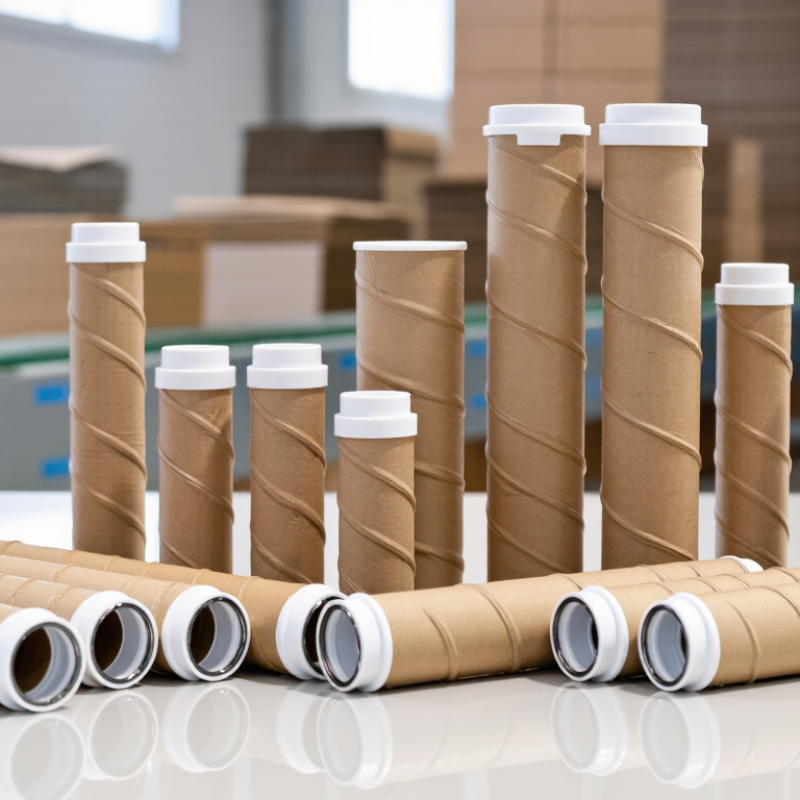
A cardboard shipping tube is a rigid, hollow container designed to protect long or rolled items during transport. It commonly uses several layers of kraft paper wound around a circular core. Adhesive binds these layers together, creating strength without adding excessive weight. The tube’s wall thickness and diameter determine its resistance to crushing, bending, and impact.
Most tubes include plastic or cardboard end caps. Some use fitted plugs that press firmly into both openings. A wider tube can protect rolled posters, maps, drawings, certificates, and fabric samples without tight curling. Narrower tubes suit documents and lightweight printed materials. In packaging inspections, I check whether the item touches the ends. Extra space may allow movement, while excessive pressure can damage delicate edges.
These tubes also serve artists, architects, photographers, educators, and online sellers. They keep large paper products flat and reduce crease marks. However, cardboard has limits. Moisture can soften the walls, and heavy contents may deform a thin tube. A waterproof outer layer helps, but it does not make the package fully waterproof. I once underestimated the importance of end-cap fit; a strong tube still fails when a cap slips out. Careful sizing, dry storage, and clear handling labels improve reliability.
The structure looks simple. The details matter.

China’s cardboard tube industry has grown alongside e-commerce, postal packaging, textiles, and industrial winding applications. Manufacturers now produce tubes in many diameters, wall thicknesses, and lengths. Recycled kraft paper is common, while stronger grades support heavier shipping loads. Factory experience matters because moisture, adhesive control, and winding tension affect tube performance.
A practical comparison of China’s top ten cardboard shipping tube manufacturers should examine more than price. Buyers should review paper specifications, compression testing, dimensional tolerance, and production capacity. Reliable factories usually provide samples before mass production. They also explain packing methods, lead times, and inspection procedures clearly. During factory evaluations, I would check whether operators record moisture levels and bond strength consistently. Small gaps in testing can create large problems during humid transport.
Customization is another important part of the manufacturing landscape. Some producers offer printed surfaces, protective end caps, or special inner coatings. These features may improve presentation, but they can also complicate recycling. The industry is efficient, but not flawless. Inconsistent cores still appear when suppliers rush orders or change raw materials without notice. Buyers should request batch records and independent pre-shipment inspections. Clear communication remains essential. Even a well-made tube can fail when its diameter, closure style, or load expectations are misunderstood.
Standardized paper formats are an important reference for cardboard shipping tube production. The chart compares the short and long dimensions of ISO 216 sheet sizes commonly protected and transported in mailing tubes. Larger formats generally require longer tube bodies and stronger end protection.
Source: ISO 216 paper-size standard. Dimensions are shown in millimetres. Actual cardboard tube diameter, wall thickness, and compression strength vary according to the rolled material, packing method, and shipping requirements.
A reliable shipping tube manufacturer should prove performance, not only display attractive product photos. Request samples with the same diameter, wall thickness, and closure style as your intended order. Test them with real documents, posters, or rolled materials. Check whether the caps fit tightly after repeated handling.
Material knowledge matters. Ask about paper grades, recycled content, adhesive type, and moisture resistance. A capable factory should explain how each choice affects compression strength and storage life. Request recent test records for edge crush, drop resistance, and dimensional tolerance. The documents should identify testing methods, dates, and sample conditions. Vague certificates deserve careful questioning.
Visit the production site when possible, or arrange a live video inspection. Observe winding machines, drying areas, cutting accuracy, and finished-goods storage. Ask how workers isolate damaged tubes and record production batches. Traceability reduces confusion when defects appear later. It also shows operational discipline.
A polished website proves little.
Compare sample quality, response speed, and technical clarity. Check whether quotations separate tooling, packaging, transport, and inspection costs. Confirm minimum order quantities and realistic lead times in writing. Speak with recent customers if references are available. Their experience may reveal delays that sales messages hide.
Do not judge factories by low prices alone. Thin walls may save money initially, but damaged shipments create replacement costs and customer complaints. I have found that communication failures can be as serious as material defects. Even careful evaluation has limits. A factory may perform well during sampling, yet struggle during peak production. Use a small trial order before committing to larger volumes.
China’s cardboard shipping tube sector includes manufacturers with different strengths, equipment, and service models. The following profiles focus on practical sourcing details rather than promotional claims.
Profile 1 specializes in spiral-wound kraft tubes for posters and documents. Profile 2 produces heavy-wall tubes for longer, heavier parcels. Profile 3 offers short production runs and flexible dimensions. Profile 4 focuses on smooth inner walls, helping products slide in easily. Profile 5 provides printed outer surfaces for stronger shelf recognition. Profile 6 combines automated cutting with manual inspection. Profile 7 supports export packaging and reinforced end caps. Profile 8 develops moisture-resistant paper solutions for demanding warehouses. Profile 9 serves large-volume orders with standardized tooling. Profile 10 focuses on custom sizes, nesting, and reduced storage space. These manufacturers may appear similar online, but their testing methods can differ widely. A polished sample does not always reflect mass-production consistency.
Tips: Request wall-thickness records, compression-test results, and recent production samples. Check tube length, end-cap fit, paper odor, and surface damage. Ask how rejected units are recorded. Confirm lead times in writing. Small details matter. Buyers should also compare shipping damage rates, not only unit prices. Some factories communicate clearly but lack advanced testing equipment. Others have strong machinery yet respond slowly to design changes. This is where careful evaluation becomes necessary.
China Top 10 Cardboard Shipping Tube Manufacturers?
Comparing suppliers requires more than checking tube prices. The Pitney Bowes Parcel Shipping Index 2023 recorded 161.8 billion parcels globally in 2022. That volume increases pressure on impact resistance, accurate sizing, and dependable production. Strong manufacturers offer spiral-wound tubes with dense paperboard walls, clean edges, and tested end caps. Ask for compression results, inner-diameter tolerances, and sample tubes before placing a large order. A tube that looks strong may still crush under warehouse stacking.
Product capability separates basic converters from experienced exporters. Review available diameters, wall thicknesses, printed surfaces, moisture-resistant coatings, and custom closures. Small orders may need digital printing, while larger runs usually benefit from flexographic production. Export service also matters. Reliable suppliers provide carton specifications, pallet counts, loading photos, inspection records, and documents that match the shipment. The International Safe Transit Association recommends testing packaging against vibration, shock, and compression conditions. Yet many buyers still judge quality from photographs. That is a weak habit.
Tips: Request a physical sample packed with your actual product. Confirm whether quoted dimensions are internal or external. Check the factory’s monthly capacity during peak seasons. Ask how rejected tubes are recorded and replaced. Leave room for doubt; specifications can change after approval. A third-party inspection is often worthwhile, especially for new suppliers or mixed-size orders.