Packaging Specialists
Packaging | Healthcare | Moulding

How to Choose Stock Bulk Bags in 2026

Choosing Stock Bulk Bags in 2026 is less about finding the biggest bag and more about matching its design to the job. A bag that holds 1,000 kilograms may still be unsuitable if it cannot fit your pallet, hopper, or storage area. Measure the load and available space before comparing options. Small details matter.

Check the safe working load, bag dimensions, lifting loops, fabric, and filling and discharge openings. Think about what the bag will hold, how often it will be moved, and whether it will sit indoors or outdoors. For powders, a liner may help protect the contents; for fast-moving operations, a suitable discharge spout can reduce handling time. These choices depend on the material and process, so confirm compatibility with your supplier rather than relying on a product photo.

Stock Bulk Bags can offer quicker availability than custom orders, but standard sizes do not suit every workflow. Ask for clear product specifications and handling guidance, and verify that the stated load capacity matches your intended use. Keep bags dry, inspect them before use, and avoid reusing a bag unless its condition and suitability have been assessed. Simple checks help.

This guide explains the practical points to compare in 2026, from size and construction to storage and supplier support. There is no perfect bag for every operation. Sometimes the overlooked fit is the real problem.

How to Choose Stock Bulk Bags in 2026

What Stock Bulk Bags Are and Where They Are Used

Stock bulk bags are ready-made flexible intermediate bulk containers (FIBCs) sold in common sizes and configurations. They can help warehouses replace damaged packaging quickly or handle recurring shipments without waiting for custom production.

The Flexible Intermediate Bulk Container Association notes that FIBCs commonly carry 500 to 4,000 pounds of dry, flowable material, though each bag’s rated capacity governs its safe load.

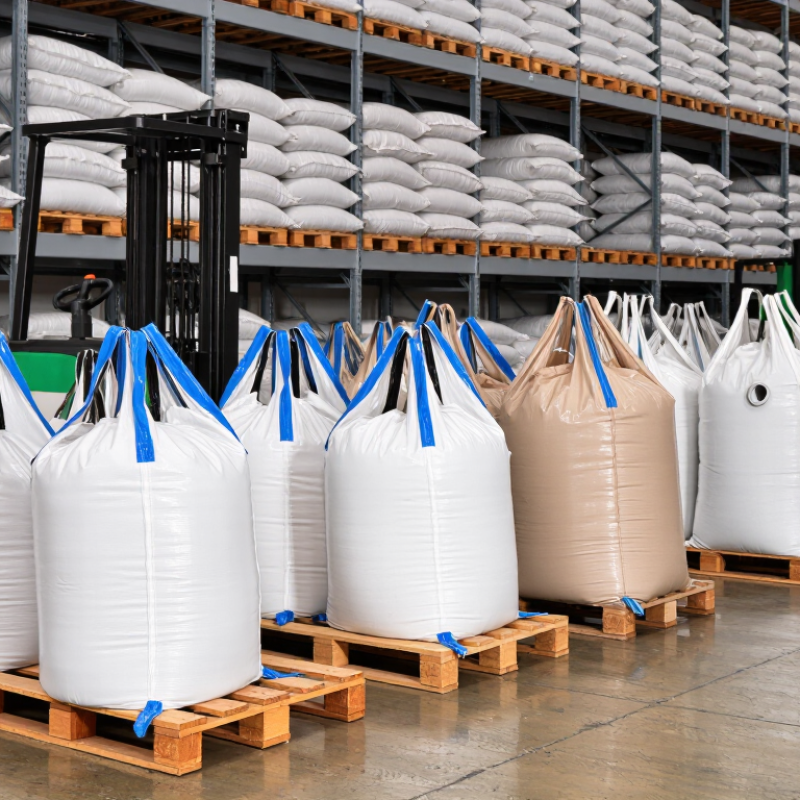
Picture a forklift lifting a filled bag from a pallet: loop placement and pallet compatibility matter.

Small details, real consequences.

Grand View Research valued the global FIBC market at USD 6.03 billion in 2023. Its market report projected 6.1% annual growth from 2024 through 2030.

Stock bags are used for products such as grain, mineral powders, plastic pellets, and construction aggregates. In agriculture, they can move seed or feed; in food processing, suitable food-contact materials may be required.

A standard bag is not automatically the right bag. Check its safe working load, fabric, lifting loops, filling and discharge openings, and liner needs against the product and handling equipment.

Moisture-sensitive powders may need extra protection, while free-flowing granules often need a controlled discharge spout.

I have seen buyers focus on capacity and overlook unloading. That can turn a convenient stock item into a slow, messy job.

How to Match Bag Size and Capacity to Your Materials

Choosing a stock bulk bag starts with the material, not the bag’s advertised capacity. Estimate the material’s bulk density, then multiply it by the volume you expect to load. Density can change with moisture, particle size, and settling. A dry load of pellets may sit differently from damp, irregular flakes. Measure the filling space, too. A bag that holds the right weight may still be too tall for your equipment.

Tips: Check the bag’s rated safe working load and dimensions against your actual filling and lifting setup. Leave room at the top for closing. If your material compacts during transport, test a representative load rather than relying on a loose-volume estimate. Small details matter.

Pay attention to how the bag will be filled, moved, and emptied. A wide bag may fit a hopper but interfere with a narrow loading bay. Check spout dimensions and lifting-loop clearance before ordering. For a recurring material, record the loaded height and weight from a trial run. Then compare those measurements with the next batch. I have seen volume estimates look tidy on paper and still miss the mark; recheck them when the material or process changes.

How to Choose Fabric, Coatings, Liners, and Closures

How to Choose Stock Bulk Bags in 2026

Start with the fabric. A woven polypropylene bag suits many dry, free-flowing materials, but fabric weight and weave affect strength and handling. Match the bag’s rated capacity to the load, then consider how it will travel. Rough pallets and repeated handling can wear fabric faster. Outdoor storage adds another concern: sunlight can weaken exposed material, so ask whether UV protection is appropriate. Specifications matter more than appearance.

Tips: Check the product’s moisture and dust sensitivity before choosing a coating or liner. A coating can help limit moisture entry and fine-particle leakage, but it may reduce breathability. Liners add a barrier; they also take up space and need to fit securely. Ask for compatibility details and test a sample with the actual material.

Closures should match the filling and discharge process. A top spout can support controlled filling, while a duffle top offers a wider opening. Bottom spouts may help empty contents cleanly, but only when their size and tie-off method suit the material. Check seams, ties, and access points before ordering. Small details matter. One easy-to-miss issue is whether workers can close the bag consistently with gloves on. A trial run may reveal awkward handling—or a choice that looked right on paper but needs reconsideration.

Which Safety and Handling Features to Check

How to Choose Stock Bulk Bags in 2026

Which Safety and Handling Features to Check

Choose a stock bulk bag by matching its capacity to the load and handling method. Check the safe working load and safety factor on the specification label; similar-looking bags may have different limits. Inspect each lifting loop for reinforced stitching and enough clearance for forklift tines or a lifting frame. Fit matters. For powders, ask whether a liner is needed and whether it suits the material and filling conditions.

Check the seams, base construction, and discharge spout. The closure should be secure and easy to reach once the bag sits on a pallet. Confirm the dimensions allow stable stacking without bulging into aisles. For outdoor storage, review UV resistance and storage guidance, since sunlight can weaken fabric over time. Lift smoothly, keep the load centered, and avoid dragging bags across rough floors. Small damage can spread.

Tips: Before filling, compare the label with your order details and inspect every loop and seam. Keep people clear of suspended loads, and use equipment rated for the bag and its contents. Never guess. A quick inspection cannot catch everything, but it is better than relying on appearance. Follow the supplier’s instructions for filling, lifting, and storage.

How to Compare Suppliers, Compliance, and Total Cost

When comparing stock bulk bags in 2026, look beyond the quoted unit price. Ask each supplier for matching specifications: dimensions, fabric weight, safe working load, lifting-loop design, and liner options. Otherwise, quotes are not comparable. Request a current test report and traceability details for the production lot. Check that documents fit your intended material, filling method, and destination requirements; compliance is use-specific. Paperwork alone is not proof of consistent production. Ask how seams and loops are inspected, and whether samples can be checked before a larger order. Small details matter.

Compare delivery windows, minimum order quantities, sample charges, and replacement terms. Confirm whether the quote includes printing, liners, palletization, freight, and import-related charges. These extras can turn a low quote into an expensive delivery. Estimate total cost per usable bag, not per bag ordered. Include filling speed, storage space, damaged units, and return arrangements where applicable. One missed delivery can cost more than a small unit-price difference.

Before committing, trial a modest batch on your actual filling line. Record handling time, leakage issues, and how bags stack after filling. A supplier may provide a neat sample, yet production can vary; ask how changes are controlled. That uncertainty deserves attention. Keep your comparison sheet simple, but leave room for doubts. Sometimes the best choice is not fully obvious.

How to Choose Stock Bulk Bags in 2026 — How to Compare Suppliers, Compliance, and Total Cost

Comparison area What to compare Evidence or acceptance criteria Effect on total cost Practical buying check
Bag construction Coated or uncoated woven polypropylene; open or closed top; flat or discharge bottom; optional liner. Construction must suit the product’s flow, moisture sensitivity, filling method, and discharge equipment. A coating can reduce moisture ingress through the fabric but does not make a bag waterproof. Added coatings, liners, closures, and discharge features increase unit cost but may reduce product loss, contamination, or handling time. Match the bag drawing and sample to the actual filling and unloading process. Confirm liner dimensions and attachment if a liner is required.
Safe working load (SWL) The rated maximum load for the complete bag, including its lifting loops and construction. Check that the SWL shown on the bag label and technical documentation meets or exceeds the heaviest intended filled load. Do not use dimensions or volume alone to determine load capacity. A higher-capacity specification may cost more and can affect fabric, loop, and handling requirements. An incorrectly rated bag can create serious safety and product-loss risks. Specify the maximum filled weight, product bulk density, and any variable-weight batches before requesting a quote.
Safety factor and intended trips Single-trip versus multi-trip design and the stated safety factor (SF). For FIBCs, 5:1 SF is commonly associated with single-trip bags and 6:1 with multi-trip designs. Confirm the applicable test documentation and intended use; a multi-trip rating does not guarantee a fixed number of reuses. A multi-trip bag may have a higher purchase price. Reuse can reduce cost per trip only when inspection, cleaning, tracking, and return logistics are practical. Request the design type-test evidence and define inspection, handling, and retirement procedures before planning reuse.
Dimensions and usable volume Bag width, length, height, filling head, discharge spout, and compatibility with pallets, racks, and equipment. Dimensions are not universal stock standards. Confirm the supplier’s actual finished dimensions and tolerances, plus the filled bag’s expected shape and stability. A poor fit can reduce pallet or vehicle utilization, slow filling and unloading, or require adapters and repacking. Check bag dimensions against the filling frame, pallet footprint, warehouse clearances, and transport limits using a sample or approved drawing.
Product protection and cleanliness Fabric cleanliness, liner type, sift-proof seams, and controls for moisture, dust, and contamination. Ask for written specifications covering materials and manufacturing controls. For food-contact applications, verify compliance documentation for the destination market and intended food-contact conditions. Higher cleanliness or barrier requirements can add material, testing, and handling costs, but may reduce spoilage, rejects, and cleanup. State the product, contact conditions, required cleanliness level, and destination jurisdiction. Do not treat a general quality certificate as proof of food-contact compliance.
Electrostatic risk Standard, dissipative, conductive, or other electrostatic-control FIBC design, selected for the product and operating environment. For combustible dusts, flammable vapors, or other ignition-sensitive settings, obtain a competent risk assessment and verify that the bag type and operating procedures are appropriate. IEC 61340-4-4 addresses electrostatic classification and test methods for FIBCs. Specialized bags and grounding or handling controls can increase purchase and operating costs; choosing the wrong type can introduce a major safety hazard. Have the site safety team specify the required bag type and grounding arrangements. Never select an electrostatic-control bag based only on appearance or a generic claim.
Dangerous goods requirements Whether the product is regulated as dangerous goods and whether the packaging must be UN-certified. Where applicable, verify the required packaging approval, marking, design type, and permitted contents against the relevant transport regulations. ISO 21898 covers FIBCs for non-dangerous goods; it is not a substitute for required dangerous-goods approval. Testing, approved designs, markings, and use restrictions can affect price and lead time. Non-compliant packaging can result in shipment rejection or regulatory penalties. Confirm the product classification, transport mode, and destination rules with the organization’s dangerous-goods specialist before ordering.
Supplier quality and traceability Manufacturing controls, batch identification, change control, complaint handling, and consistency between samples and production. Request relevant quality records, inspection or test reports, a production sample, and written notification requirements for material or design changes. Check that documents identify the bag design being purchased. Stronger controls may affect unit price but can reduce incoming inspection effort, rejected deliveries, and unplanned downtime. Compare suppliers on documented controls and response capability, not on a generic certificate or a sample that is not tied to the quoted specification.
Lead time and availability On-hand quantity, replenishment lead time, order minimums, delivery terms, and contingency stock. Ask suppliers to confirm stock availability and delivery dates in writing. Distinguish stock items from made-to-order bags and check whether specifications may vary between production lots. Longer lead times can require more inventory and working capital. Expedites, shortages, and production interruptions can outweigh a lower unit price. Compare the same specification, quantity, delivery location, and requested delivery window for every quote.
Total landed cost Purchase price plus freight, duties, receiving, storage, inspection, handling, and expected loss or disposal costs. Use a consistent cost model and quote basis. Record currency, Incoterms where applicable, freight assumptions, and any separate charges. The lowest quoted unit price may not produce the lowest delivered or usable cost. Calculate: total landed cost per usable bag = purchase, freight, duties, and receiving costs divided by the quantity accepted for use.
Cost per successful use Usable load, fill and discharge time, product loss, damage rate, and—if approved—verified reuse cycles. Base the comparison on operational records or a controlled trial. Do not assume repeated use solely from an advertised multi-trip rating. Bag price is only one part of cost; labor, rejected product, downtime, and return logistics can materially change the result. Compare the full cost per successful fill, delivery, and discharge for the same product and process.

Planning note: Requirements and approvals depend on the product, destination, transport mode, and intended use. Confirm the final specification and applicable regulations before purchase.