Packaging Specialists
Packaging | Healthcare | Moulding

What to Know About Folding Carton Packaging in 2026?

In 2026, folding carton packaging is set to undergo significant transformations. The industry faces growing demands for sustainability and efficiency. As consumers become more eco-conscious, brands are turning to folding carton packaging for its recyclability and versatility.

This packaging format offers numerous benefits. It provides excellent protection for products and is lightweight, reducing shipping costs. However, the manufacturing process can generate waste. Companies need to reflect on improving their production methods. Innovation is key in developing sustainable materials and minimizing environmental impact.

Businesses must also consider consumer preferences. Shifting trends require packaging that appeals visually while providing functionality. Folding carton packaging must adapt to meet these evolving needs. Engaging designs can enhance brand recognition but require a balance with sustainability. Overall, the future of folding carton packaging presents both challenges and opportunities for growth.

What to Know About Folding Carton Packaging in 2026?

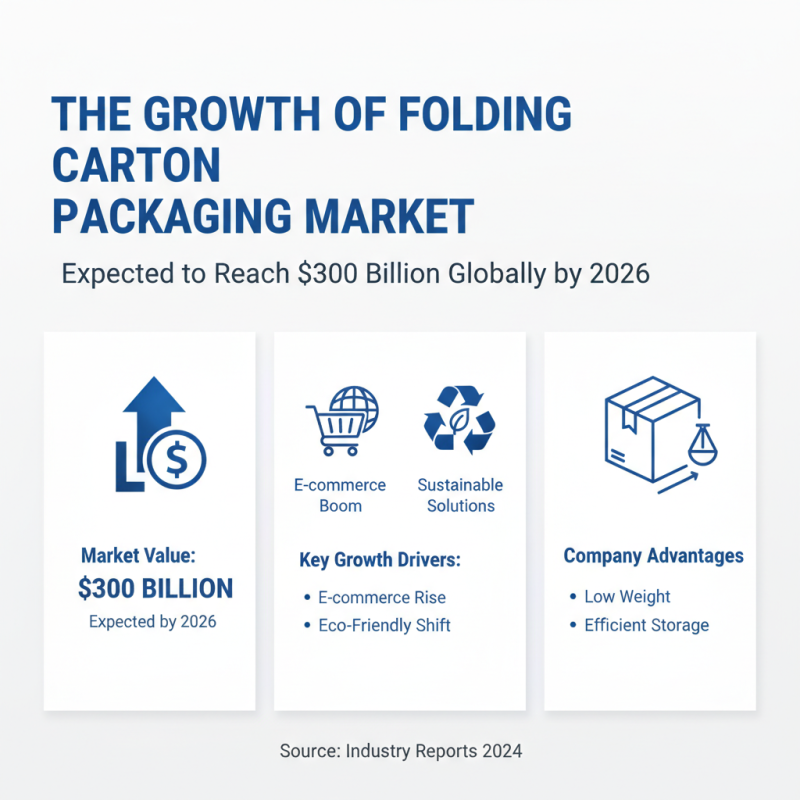
The Growth of Folding Carton Packaging Market by 2026

What to Know About Folding Carton Packaging in 2026?

The folding carton packaging market is poised for significant growth by 2026. Industry reports indicate that this market is expected to reach USD 300 billion globally. Key drivers include the rise of e-commerce and a shift towards sustainable packaging solutions. Companies increasingly favor folding cartons due to their low weight and efficient storage.

Sustainability plays a crucial role. A recent study by Smithers shows that 70% of consumers prefer eco-friendly packaging. Folding cartons are often made from recyclable materials, aligning with this consumer preference. This trend pushes manufacturers to innovate and develop sustainable materials and practices.

However, challenges remain. While the market flourishes, supply chain disruptions and rising raw material costs pose risks. These factors can impact pricing and availability, potentially slowing growth. It's vital for industry participants to address these issues to fully capitalize on market opportunities. The future of folding carton packaging will depend on balancing growth with sustainability and operational efficiency.

Key Materials Used in Folding Carton Packaging and Their Innovations

Folding carton packaging is evolving rapidly. In 2026, innovations in materials will play a critical role. The market is projected to reach $250 billion, highlighting the focus on sustainable solutions. Companies are investing in eco-friendly materials, such as recycled paper and bioplastics. These materials reduce environmental impact while maintaining product integrity.

One of the most notable advancements is water-based inks. They are safer and more efficient than traditional solvent-based inks. According to a recent industry report, using such inks can reduce VOC emissions by up to 80%. This shift not only supports sustainability but also enhances product safety. Consumers are increasingly conscious of packaging materials.

**Tips:** Consider opting for folding cartons made from renewable resources. Avoid excess laminate when possible to enhance recyclability. Regularly review your packaging strategy to stay aligned with industry trends. Evaluate your components for potential innovations. Such practices can not only make your products more appealing but can also encourage best practices across supply chains.

Folding Carton Packaging Material Innovations in 2026

Sustainability Trends Impacting Folding Carton Packaging Practices

In 2026, sustainability will continue to reshape folding carton packaging. Companies are likely to prefer sustainable materials. Recycled content will increase in demand. This shift stems from growing environmental awareness among consumers. They expect brands to use eco-friendly practices. This pressure drives innovation, pushing manufacturers to create greener solutions.

Biodegradable options are gaining traction. New materials reduce waste and minimize harm to ecosystems. Yet, the transition isn't free from challenges. Not all recyclable materials perform well for packaging. Brands might struggle with sourcing and costs. Finding a balance between functionality and sustainability is crucial.

Furthermore, consumer education is vital. Many people still lack understanding of recycling symbols. Misconceptions can lead to improper disposal. This indicates a need for clearer communication. Packaging brands should consider how they can improve transparency. It’s necessary to reflect on these elements as we move forward. Sustainability is more than a trend; it requires commitment and continuous improvement.

What to Know About Folding Carton Packaging in 2026? - Sustainability Trends Impacting Folding Carton Packaging Practices

Category Current Trends Projected Changes by 2026 Sustainability Practices
Materials Recycled paperboard usage Increase in biodegradable materials Partnerships for sustainable sourcing
Design Minimalistic designs Smart packaging features for recyclability Emphasis on easy-to-recycle formats
Production Energy-efficient manufacturing processes Automation and AI integration Reduction of carbon footprint
Consumer Preferences Demand for eco-friendly packaging Shift towards transparency in sourcing Consumer education on recycling practices
Regulations Increased regulation on single-use plastics More stringent sustainability standards Compliance with international regulations

Technological Advancements in Folding Carton Manufacturing Processes

The folding carton packaging industry is poised for significant growth by 2026. Innovations in manufacturing processes are driving this change. Advanced automation is becoming more common in factories. Reports suggest that automated systems can improve production efficiency by up to 30%. This efficiency can lead to significant cost savings for manufacturers.


Moreover, digital printing technology is evolving rapidly. It allows for high-quality graphics on cartons at a lower cost. Digital printing also enables shorter runs and quicker turnaround times. According to industry studies, over 50% of packaging suppliers now utilize digital technologies. This shift towards digital is making custom packaging more accessible, even for small businesses.


Sustainable practices are another key focus area. Many companies are exploring eco-friendly materials and processes. Using recycled materials can reduce waste and attract environmentally conscious consumers. However, some challenges remain. Sourcing sustainable materials can be costly and complicated. The industry needs to address these concerns to maximize the benefits of innovation.

Consumer Preferences and Trends Shaping Folding Carton Designs in 2026

In 2026, consumer preferences strongly impact folding carton designs. Sustainability remains a top priority. According to a recent report by Smithers Pira, 74% of consumers prefer eco-friendly packaging. Brands face growing pressure to adopt sustainable materials. Recycled paper and plant-based inks are trending. These materials not only reduce environmental impacts but also appeal to eco-conscious shoppers.

Customization and personalization are other vital aspects. Consumers now seek unique packaging that reflects their identities. The same Smithers report notes that 63% of consumers enjoy unboxing experiences that feel tailored. Brands adapting to this trend often use vibrant colors and innovative shapes. Enhanced printing technologies enable more artistic designs, capturing consumer attention on crowded shelves.

However, brands must not overlook practicality. Lightweight designs are crucial for reducing shipping costs. The push for smaller packaging sizes can conflict with customer desires for more product visibility. Balancing functionality with aesthetic appeal poses a challenge. The industry must monitor these evolving consumer expectations to stay relevant in a dynamic market.