
Choosing Thermal Cash Register Paper in 2026 involves more than finding a roll that fits the counter printer. The right choice supports clear receipts, reliable feeding, and a smoother checkout during busy hours. Small details matter. Width, roll diameter, core size, and coating all affect compatibility and everyday performance. Check the printer manual or manufacturer’s specifications before ordering; a roll that looks correct may still jam or leave unused space. Then consider how quickly your store prints receipts and how long customers may need to keep them.
Thermal Cash Register Paper responds to heat, so print quality depends on the paper, printer settings, and storage conditions. Compare samples for sharp text, even darkness, and clean cutting, rather than relying on product photos alone. Ask suppliers for specifications and consistent quality information, including details about coatings and available material options. Keep spare rolls away from heat, sunlight, and moisture. Simple, but often overlooked. There is no single best roll for every business: a café, supermarket, and small service desk can have different needs. A lower price may look attractive, yet frequent jams or faint receipts can cost time. This guide explains how to assess fit, paper quality, supplier reliability, and value in 2026. Some choices still require testing. A short trial with your actual printer can reveal practical issues that a product description cannot.
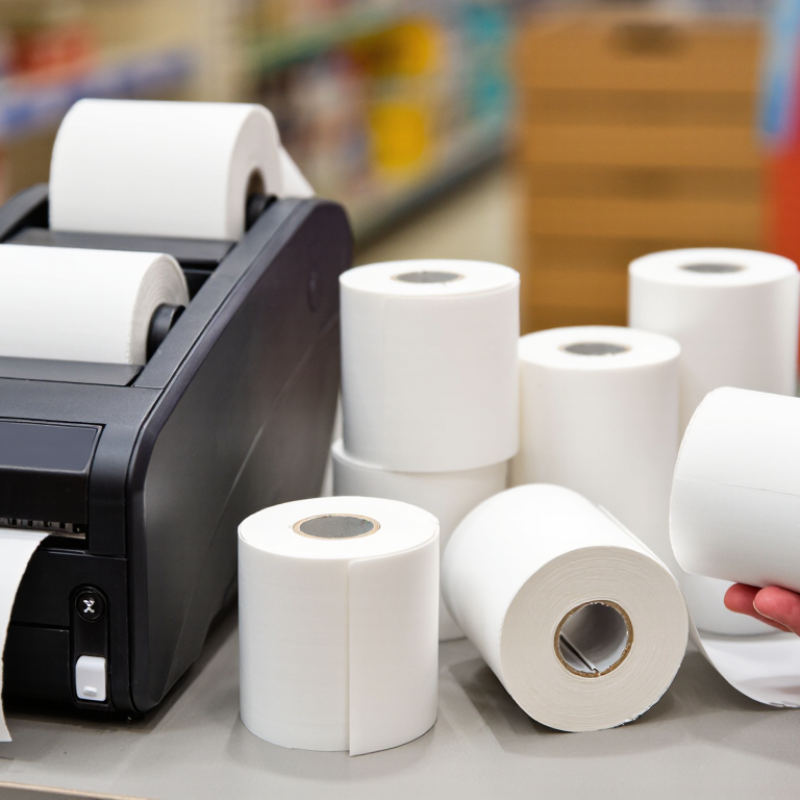
Thermal cash register paper uses a heat-sensitive coating to create printed text. Inside the printer, a heated printhead touches the paper and darkens selected areas. No ink cartridge is needed. The process is quick and quiet. You can often see the coating’s smooth surface on a fresh roll.
Paper choice affects more than legibility. Check the roll width, diameter, and core size against your register’s specifications. A roll that is too wide may not feed correctly, while an oversized roll can jam the compartment. Coating quality also matters: uneven printing can make small prices or transaction details hard to read. I still find it easy to overlook storage conditions. Heat, sunlight, and friction can make prints fade sooner.
Tips: Match the paper dimensions to your printer, then test a roll during a normal shift. Keep spare rolls in a cool, dry drawer, away from windows and warm equipment. Compare a fresh print with one stored for a few weeks. Fading varies, so a small trial can reveal issues before you buy in bulk.
| Selection Dimension | Typical Details | What to Check Before Buying |
|---|---|---|
| How thermal printing works | Direct thermal paper has a heat-sensitive coating. The printer’s thermal printhead heats selected areas of the coating to create text and images, so the process does not require ink or a ribbon. | Confirm that the device is a direct thermal printer. Thermal transfer printers use a ribbon and require a different printing setup. |
| Coated side | The heat-sensitive layer is on one side of the paper. On many rolls, the printable side is on the outside, but roll construction can vary. | Use the roll-loading diagram or test-print instructions for the specific printer. Loading the paper with the coated side away from the printhead can result in blank output. |
| Roll width | Common receipt-roll widths include approximately 57–58 mm and 80 mm. The exact usable print width is generally narrower than the roll width. | Match the printer’s specified roll width. Do not choose by appearance alone; even a small width mismatch can prevent correct feeding or printing. |
| Roll diameter and core | Outer diameter and core size affect how much paper fits and whether the roll mounts correctly. These dimensions vary among printer models. | Check the printer manual for maximum roll diameter and the required core or spindle dimensions. A roll that is too large may not fit the paper compartment. |
| Paper weight and thickness | Receipt paper is sold in different basis weights and thicknesses. Heavier paper may feel more substantial, but weight alone does not determine printer compatibility or image quality. | Choose a specification supported by the printer and appropriate for the cutter and feed mechanism. Compare stated basis weight and thickness rather than relying only on “premium” descriptions. |
| Image clarity and printer settings | Print darkness depends on the paper coating, printhead condition, printer temperature settings, and print speed. | Test a sample roll for legible text and barcodes. If printing is too light or too dark, check printer settings and printhead cleanliness as well as the paper specification. |
| Image storage life | Direct thermal images can fade over time. Heat, prolonged light exposure, humidity, friction, and contact with certain chemicals can affect image durability. | For receipts that must be kept, follow the paper maker’s storage guidance and keep them away from heat, direct sunlight, and moisture. Use a more durable record method when long-term retention is required. |
| Chemical disclosures | Thermal paper formulations vary. Products may be described as BPA-free, BPS-free, or phenol-free; these terms refer to different formulation claims. | Read the product’s current composition or compliance documentation and check the specific substances relevant to your purchasing requirements. Do not treat one “free-from” claim as proof of all other claims. |
| Handling and storage | Store unused rolls in their packaging in a cool, dry place, away from direct sunlight and strong heat. Avoid unnecessary contact with the coated surface. | Check the manufacturer’s stated storage conditions and use rolls within any recommended storage period, especially when print readability is important. |
| Practical selection checklist | Compatibility, clear printing, suitable roll capacity, and the required image-retention or chemical specifications are the main purchasing considerations. | Verify printer type, roll width, maximum diameter, core size, paper specification, and any documentation requirements before ordering. Test a sample in the actual printer when possible. |