Choosing the right clear tubes for your needs can be a daunting task. Clear tubes are versatile and widely used in various industries. They serve different purposes, from packaging to laboratory use. Understanding the specific requirements for these tubes is crucial for success.
Clear tubes come in various materials, sizes, and thicknesses. The choice you make can impact the quality of your project or product. Factors such as clarity, flexibility, and durability should be considered. You might wonder if thicker tubes are always better. Sometimes, thinner options offer more flexibility, depending on the application.
It's essential to evaluate your needs carefully. Are you using the tubes for storage, transportation, or display? Each purpose may require different characteristics. Mistakes in selection can lead to costly consequences. Aim to match the clear tubes with your project requirements precisely.

Clear tubes come in various types, each serving specific purposes.
Acrylic tubes are lightweight and offer good optical clarity.
They are popular in displays and protective covers.
Polycarbonate tubes are stronger and more impact-resistant, making them ideal for applications that require durability, such as safety guards or protective barriers.
PVC clear tubes provide excellent chemical resistance. This makes them a common choice in laboratories and industrial settings.
Use these tubes for transporting various substances safely.
Silicone tubes are flexible and can withstand extreme temperatures.
They are often used in medical applications, including IV lines and drainage systems.
Choosing the right type of clear tube requires understanding your needs. Reflect on the specific properties you require, such as resistance to chemicals or strength. Sometimes, the cheapest option may not meet your long-term needs. Always consider potential failures that might arise from poor choices.

When choosing clear tubes, consider the material. Different plastics offer varying levels of flexibility and durability. Polycarbonate is strong but can be more expensive. PET is lightweight and affordable but less durable.
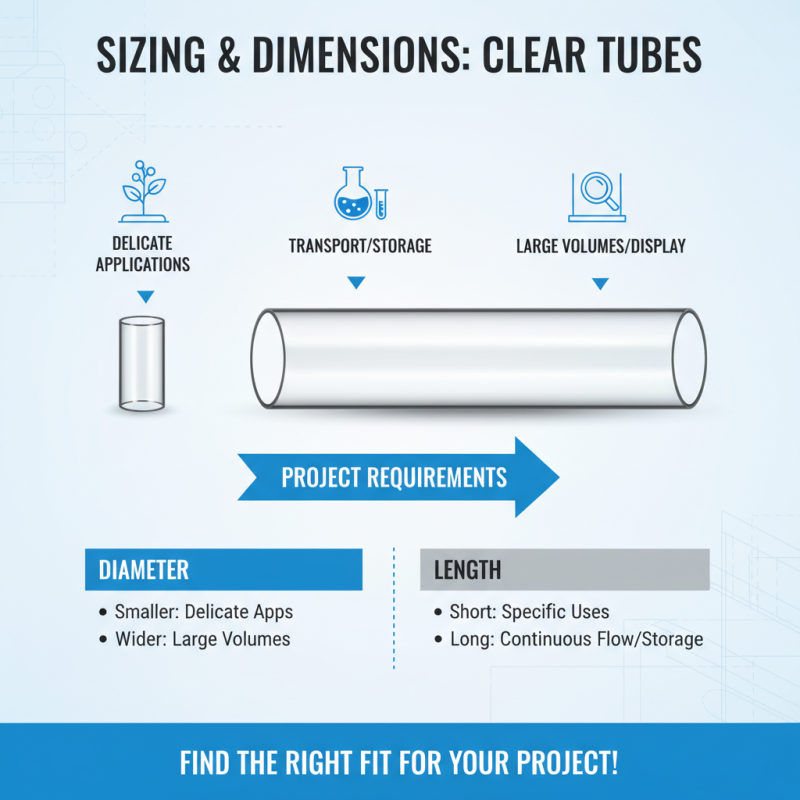
Next, think about the tube diameter. A wider diameter can accommodate larger objects, while a smaller diameter is better for precision applications. It's essential to assess your specific needs.
Length is another critical factor. Short tubes are ideal for compact spaces, while longer tubes provide versatility. Take measurements carefully to avoid issues later on. Reflecting on these aspects can help ensure you make a more informed decision.
Choosing the right clear tubes requires a good understanding of the available materials. Polyethylene, polycarbonate, and acrylic are popular choices. Each material has unique benefits that cater to different needs.
Polyethylene is lightweight and flexible. It offers excellent chemical resistance, making it suitable for various applications. However, it may not be as durable as other options. Polycarbonate, on the other hand, is very strong and impact-resistant. It's ideal for situations where durability is key. But, it can be more expensive, which might not fit every budget.
Acrylic stands out for its clarity and UV resistance. It is perfect for display purposes, allowing for vivid visibility of the contents inside. Still, care is necessary as it can scratch easily. When selecting clear tubes, consider your specific needs and the environment where they will be used.
Tips for selecting materials include evaluating the chemical compatibility first. Assess the environmental conditions too. It’s essential to gather user feedback on the tubes to make an informed decision. Remember to weigh the pros and cons of each material to find the right fit for your project.
When selecting clear tubes, sizing and dimensions are critical. Your project’s requirements dictate the tube’s diameter and length. For instance, a smaller diameter may suit delicate applications, while wider tubes support larger volumes. Consider the purpose of the tube. Is it for transportation, storage, or display? Each use case may demand different dimensions.
Understanding your project's specific needs will help streamline the decision-making process. Measure twice, cut once. Gather accurate measurements for the required fit. A tube that is too tight may compromise functionality. Conversely, one that is too loose can lead to unwanted movement. Be cautious with internal and external dimensions; the tube's thickness affects both strength and flexibility.
You may also want to consider the environment in which the tubes will be used. Will they be exposed to extreme temperatures or chemicals? Such conditions can impact the tube's performance. Finding the right clear tube means balancing functionality with durability. Reflect on the materials and their properties. Sometimes, it’s beneficial to prototype with various sizes before making a final choice. This trial and reflection can lead to better long-term results.
Maintaining and storing clear tubes can be quite a challenge. Proper care ensures their longevity and performance. To begin, always clean the tubes after each use. Residue can build up, affecting clarity and usability. A mild detergent mixed with warm water works well. Use a soft brush to reach the insides, then rinse thoroughly. Dry them completely to prevent moisture buildup.
When it comes to storage, choice of location matters. Avoid direct sunlight, as it can degrade materials. Consider a cool, dry space. Stack the tubes upright or lay them flat, separated to prevent scratches. Use protective sleeves or bubble wrap for added safety if you’re storing multiple tubes together.
Lastly, regularly review your inventory. Clear tubes can become dusty or misplaced. A simple check can save time and hassle later. Stay proactive about their care. A little effort today can prevent larger issues tomorrow. Adapting your storage habits can lead to better outcomes in the long run.