How to Choose the Best Wine Box for Your Business?
Choosing packaging for a wine business is not just a branding exercise. The right box can protect bottles, simplify storage, and make an order feel considered when it reaches a customer. The Wine Box should fit your product and your day-to-day operations, not just look impressive in a photograph.
Start with the bottle dimensions, closure, and number of bottles in each pack. A snug insert can limit movement, while sturdy board helps withstand routine handling. Ask suppliers about materials, sample boxes, print quality, and production lead times before committing to a large order. Then test a sample with your own bottles. Check whether it closes cleanly, stacks securely, and is comfortable to carry. Small details matter.
Looks are not enough. Consider how the box will be used: retail display, gifting, direct shipping, or several of these. A premium finish may suit a gift range, but it can add cost without improving protection. Likewise, sustainability claims should be supported by clear material information rather than vague wording. Compare unit price alongside minimum order quantities, storage needs, and the effort required to pack each box. These practical costs are easy to miss.
There is no single best option for every business. Your sales channel, brand style, and budget all shape the choice, and a design that works for one bottle may fail with another. This guide explores the key questions to ask, so you can choose packaging with evidence, not guesswork.
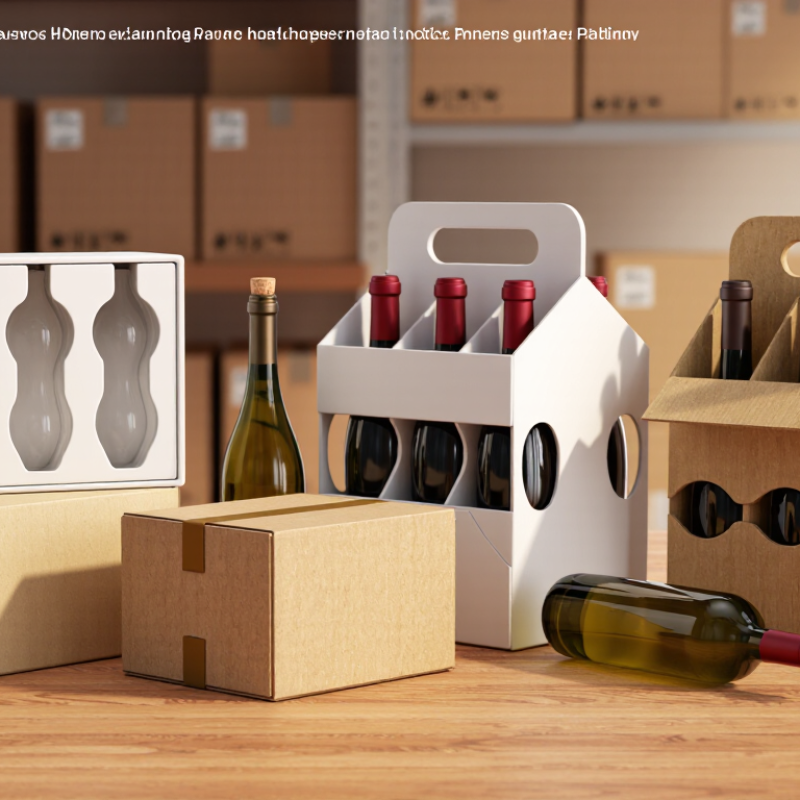
Define Your Business Needs and Wine Packaging Goals
Start with the job. Will the box travel through parcel networks, sit on a retail shelf, or serve as a gift package? Each use calls for different protection, presentation, and cost priorities. Record bottle dimensions, weight, order size, and shipping route before comparing box styles. A snug insert can limit movement, but test it with your actual bottle; small shape differences matter.
Market context helps set realistic goals. The International Organisation of Vine and Wine estimated global wine consumption at 221 million hectolitres in 2023, down 2.6% from 2022 (State of the World Vine and Wine Sector in 2023, published 2024). That figure describes a large, changing market, not demand for any particular box. For your business, identify the buyer and the moment that matters: safe delivery, clear shelf display, or a memorable opening. A common misstep is choosing appearance before measuring the shipment.
Set measurable packaging targets. Compare unit price with storage space, assembly time, and the cost of breakage or returns. Ask suppliers for material specifications, recycled-content details, and recycling guidance for your local customers. Then pack a real order and test stacking, handling, and moisture exposure. It takes time. But a beautiful box that fails in transit is still the wrong box.
Select Box Dimensions and Design for Your Wine Products
Measure each wine bottle before choosing box dimensions. Record its height, widest body point, shoulder, neck, and closure; even bottles sold as 750 ml can differ in shape. Add enough clearance for a protective insert, but not so much that the bottle shifts in transit. A snug fit matters. Test the box with the actual bottle and divider, then tilt and gently shake it. If glass taps cardboard, adjust the insert or internal spacing. There is no perfect universal clearance, and that is easy to forget when designing from a drawing.
Design should suit both the product and its destination. A gift box may need a clean opening and room for a note, while a shipping carton needs secure partitions and easy stacking. McKinsey & Company’s 2020 global packaging survey found that more than 60% of consumers surveyed said they would pay more for sustainable packaging. That supports considering recyclable materials, but material choice still needs to protect the bottle. A beautiful box that arrives damaged misses the point. The first mock-up may look a little plain.
Tips: Measure every bottle style, including labels and closures. Pack a sample and test it through handling before ordering in bulk. Small batches cost more per unit, but can reveal sizing problems early.
Evaluate Branding, Sustainability, and Regulatory Requirements
A wine box should make your brand recognizable before the bottle is opened. Use a consistent color, a clear logo, and a finish that suits your price point. A small tasting note or winery story can add warmth without crowding the panel. In its 2023 U.S. packaging survey, McKinsey reported that 60–70% of consumers said they would pay more for sustainable packaging. That is useful, not decisive. Check what your own customers value before paying for elaborate printing or finishes.
Sustainability depends on the full package, not just a recyclable symbol. The U.S. Environmental Protection Agency reported that containers and packaging generated 82.2 million tons of municipal solid waste in 2018, or 28.1% of the total. Choose a right-sized box, limit unnecessary inserts, and ask suppliers for material composition and recycling guidance. A sturdy corrugated design may protect bottles with less extra cushioning. Still, a lighter box is not better if breakage increases. Small details matter.
Regulatory checks vary by destination and sales channel. Confirm that required product information stays legible on the bottle, and check whether case or shipping cartons need specific markings. For exports, verify local packaging, recycling-label, and transport rules with a qualified compliance adviser. I would not assume one carton works everywhere; even familiar symbols can mean different things across markets. A beautiful box is not enough.
How to Choose the Best Wine Box for Your Business?
Compare packaging concepts across branding flexibility, sustainability potential, and regulatory readiness.
How to read this chart: Scores are illustrative planning ratings from 1 (low) to 5 (high), not measured industry results. A higher regulatory-readiness score means the format is easier to adapt for required labels and market-specific packaging rules; it does not guarantee compliance. Confirm material claims with suppliers and check applicable local regulations before ordering.
Compare Suppliers, Costs, and Sample Performance
A wine box must protect glass bottles and represent your business well. Compare suppliers on board strength, print quality, lead time, and communication. Ask whether they can share material specifications and production tolerances. Clear answers matter. A low quote means little if delivery dates keep shifting. Check whether the supplier has experience with your box size, bottle weight, and shipping method.
Compare the full landed cost, not just the unit price. Include setup fees, inserts, freight, storage, and charges for small production runs. Request quotes at two or three order quantities; the price break may be smaller than expected. A detailed spreadsheet helps, though estimates can still miss seasonal freight changes. That part is easy to overlook.
Order samples from shortlisted suppliers and test them with the actual bottle. Check fit, closure, and whether the insert holds the bottle steady after gentle handling. Look for crushed corners, loose joints, uneven printing, and sharp edges. Ask for a plain structural sample as well as a finished printed one. A polished sample may not reflect every production run. It can be frustrating, but record what fails and ask how the supplier will correct it before approving a larger order.
