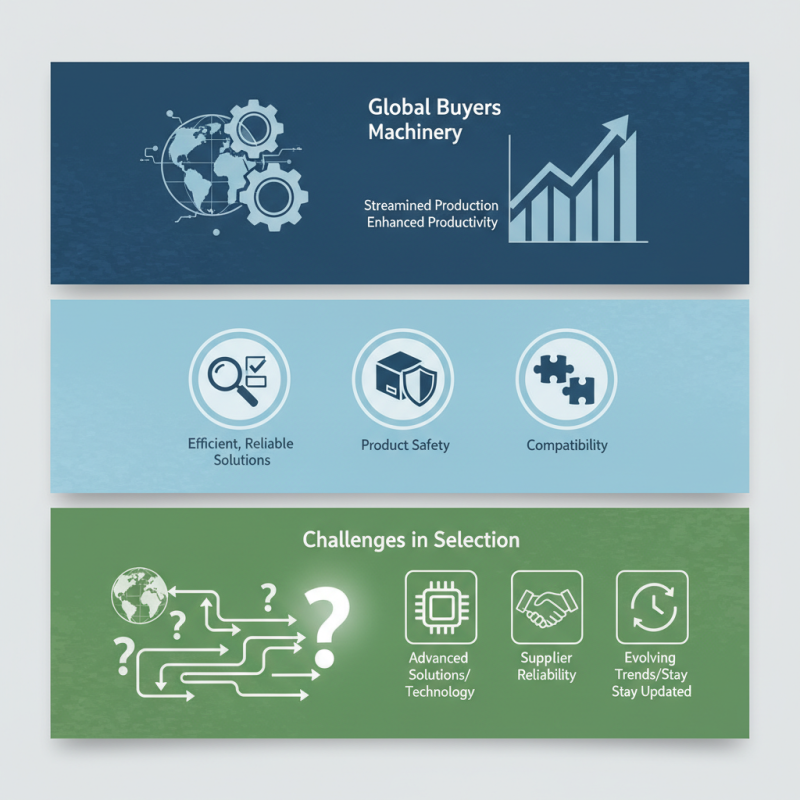
In today's fast-paced market, Packaging Machinery plays a crucial role in streamlining production processes. Companies worldwide seek efficient, reliable solutions for their packaging needs. The right machinery can enhance productivity and ensure product safety.
Global buyers face challenges in selecting the best equipment. With numerous options available, it is essential to consider quality and compatibility with existing systems. An informed decision can save time and resources, but navigating the complexities of various machines is daunting.
While many manufacturers offer advanced solutions, not all meet industry standards. Buyers must do thorough research, evaluating technology and supplier reliability. The landscape of Packaging Machinery is ever-evolving, and staying updated with trends is vital for success.
Packaging machinery plays a crucial role in global trade today. According to a recent report by MarketsandMarkets, the global packaging machinery market is expected to reach $60 billion by 2026. This rapid growth highlights the importance of effective packaging solutions for companies looking to expand their reach. Not only does packaging enhance product protection, but it also elevates brand presentation.
Moreover, efficient packaging reduces waste and contributes to sustainability efforts. A study by the Association for Packaging and Processing Technologies indicates that over 30% of manufactured goods are damaged due to inadequate packaging. This statistic serves as a reminder that investing in high-quality machinery can significantly impact overall supply chain effectiveness. Businesses must continually assess their packaging methods to remain competitive.
While advancements in technology offer numerous solutions, challenges still exist. Many companies struggle with integrating new machinery into existing systems. Adaptability and training become essential, and failure to address these areas can lead to inefficiencies. It’s important for buyers to evaluate their specific needs and stay informed about industry trends.
When considering packaging machinery solutions, diverse industries require specific approaches. The food and beverage sector dominates the market, accounting for nearly 40% of global packaging machinery sales. Key types include filling machines, labeling systems, and vacuum packaging technology. These machines prioritize speed and efficiency, meeting the high demand for consumables worldwide.
The pharmaceutical industry closely follows, representing about 25% of the market. Here, precision is essential. Machinery like blister packaging and cartoning systems ensures product integrity and compliance with strict regulations. With the global pharmaceutical packaging market projected to reach $150 billion by 2025, investing in the right solutions can significantly enhance production efficacy.
Tips: Always assess your production capacity before investing. Choose machines adaptable to future needs. Additionally, consider partnerships for maintenance support, minimizing downtime.
The cosmetic industry presents another unique challenge. Sustainability is now a driving ingredient in packaging solutions. Many companies seek biodegradable materials and energy-efficient machinery. This shift not only meets consumer demand but also aligns with global environmental goals. Embracing innovation in packaging can set businesses apart in a crowded market.
When selecting packaging machinery, several key features should be prioritized. First, consider efficiency. Modern machines should achieve high output rates. According to a recent report by the Packaging Machinery Manufacturers Institute (PMMI), about 73% of industry professionals view efficiency as a top purchasing factor. There’s a growing demand for machines that can adapt quickly to various products. Flexibility allows manufacturers to switch between product lines without significant downtime.
Integrating technology is also crucial. Advanced machinery now includes smart technology, which enhances operation and maintenance. Data from the International Packaged Goods Association indicates that features like IoT connectivity can boost overall equipment effectiveness by up to 20%. However, the implementation of these technologies can often lead to higher initial costs. Buyers must weigh these costs against potential long-term gains in efficiency.
Finally, assess the support and service provided by manufacturers. Reliable after-sales support can be a game-changer during equipment malfunctions. A survey by the Automated Packaging Association pointed out that 60% of companies experienced unanticipated downtime due to lack of adequate support. It raises questions about long-term relationships with suppliers and their commitment to maintenance and repairs. A focus on thorough research and evaluation is essential to avoid future setbacks in production.
The global packaging machinery market is rapidly evolving. According to industry reports, it is projected to reach $55 billion by 2027. This growth highlights the increasing demand for efficient packing solutions across various sectors. Key players in this market focus not only on enhancing productivity but also on environmental sustainability.
Leading manufacturers worldwide strive to meet diverse requirements. They provide solutions like automated packaging lines, labeling machines, and form-fill-seal equipment. A recent study indicated that around 30% of packaging machinery sales are driven by companies seeking automation to optimize labor costs. However, the challenge remains in finding machinery that accommodates rapidly changing consumer preferences.
As technological advancements continue, the need for customization becomes essential. Companies are urged to assess their specific needs carefully. Many struggle with integrating new machinery into existing systems. Thus, staying ahead in innovation while ensuring operational continuity becomes a critical issue. The industry must prioritize flexibility and user-friendliness in future designs.
The packaging machinery industry is undergoing significant transformation. Future trends point towards automation and smart technology adoption. According to a recent report, the global packaging machinery market is expected to reach $50 billion by 2025, driven by e-commerce growth and sustainability demands. As companies seek efficiency, robotics and AI will play crucial roles. These technologies streamline operations and minimize human error.
One notable trend is the rise of eco-friendly materials and practices. Manufacturers are focusing on biodegradable packaging and reducing waste. This shift aligns with growing consumer preferences for sustainable products. Adopting circular economy principles not only benefits the environment but also enhances brand reputation.
Tips: Explore automation to boost productivity. Investing in smart sensors can provide real-time data, improving decision-making. Regularly assess your machinery to stay competitive and adapt to changing market needs. Embrace innovation, but remember to reflect on your processes. There’s always room to improve efficiency and reduce costs.
| Packaging Type | Technology | Key Features | Emerging Trends | Efficiency Rating |
|---|---|---|---|---|
| Flexible Packaging | Automated Filling | High-Speed Operation | Sustainability | 90% |
| Cartoning | Robotic Integration | Precision Handling | Smart Automation | 85% |
| Shrink Wrapping | Heat-Sealing Technology | Product Visibility | Eco-Friendly Materials | 88% |
| Palletizing | Automated Pallet Systems | Space Optimization | AI-Powered Robotics | 92% |
| Labeling | Digital Labeling | High-Resolution Printing | Data-Driven Analytics | 86% |