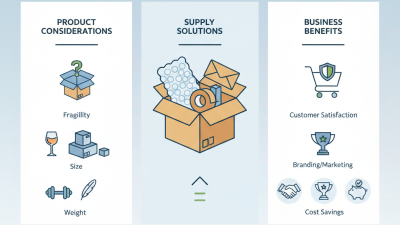
Global buyers judge more than a product’s appearance. They examine protection, consistency, handling, and delivery risk. A damaged carton can erase months of trust within minutes. That is why business packaging deserves commercial attention, not only creative attention. Walter Soroka, author of Fundamentals of Packaging Technology, described packaging as “the means of ensuring the safe delivery of a product to the ultimate consumer in sound condition at the minimum overall cost.” His definition remains practical for international trade. Packaging must protect the item while controlling material, labor, storage, and freight expenses.
This guide, “10 Business Packaging Tips for Global Buyers,” explores the details that influence purchasing decisions. It considers carton strength, moisture resistance, product fit, pallet stability, and clear handling marks. Small choices matter. A loose insert may allow movement during a long sea journey. An untested coating may soften in humid storage. A heavy box may increase freight costs without improving protection. These issues often appear after production, when changes become expensive.
Reliable business packaging also supports buyer confidence. Use consistent dimensions, readable product information, and packaging that warehouse teams can stack safely. Verify destination-market requirements with qualified logistics or compliance professionals. Requirements can differ by product, destination, and transport method. Do not assume one package works everywhere.
Some recommendations may need revision after real shipment data. That is normal. Packaging trials, drop tests, moisture checks, and buyer feedback reveal weaknesses that drawings cannot show. A thoughtful exporter keeps records and improves the design. Global packaging is not perfect at the first attempt. It becomes stronger through measured learning, honest review, and disciplined execution.

10 Business Packaging Tips for Global Buyers
Global buyers judge packaging before they inspect the product. They notice damage, unclear labels, and unnecessary materials quickly. The World Bank’s What a Waste 2.0 report estimates that global waste could reach 3.4 billion tonnes annually by 2050. Packaging choices matter.
Tip: Map the buyer’s market before selecting materials. Check climate, transport distance, storage conditions, and recycling access. A humid route may require stronger seals and moisture barriers. A cold route may need impact testing. ISO 780 recommends clear handling symbols, but symbols should support local language instructions, not replace them. Keep compliance evidence organized.
Tip: Design for fewer surprises. The International Post Corporation reports that delivery experience strongly influences cross-border online shopping satisfaction. Use drop tests, vibration tests, and compression tests before shipment. Measure damage rates by destination. One carton may work in Europe but fail on a long tropical route. That lesson is easy to miss.
According to UNEP’s 2023 Turning off the Tap report, system-wide changes could reduce global plastic pollution by 80% by 2040. Buyers increasingly ask for recyclable, reusable, or lightweight packaging. Yet “eco-friendly” is not enough. State the material type, recycled content, disposal method, and testing basis clearly. I have seen lightweight packs fail under stacking pressure. Less material is not always better. Recheck the design with real warehouse conditions, not only a clean laboratory.

Global buyers judge packaging before opening the carton.
Protection, sustainability, and cost control must work together. Begin with the product’s real journey: vibration, humidity, stacking pressure, and temperature changes. A reinforced corner, molded insert, or moisture barrier can prevent expensive damage. However, more material is not always safer. Overpacking raises freight weight and disposal costs.
The OECD’s Global Plastics Outlook reports that 353 million tonnes of plastic waste were generated in 2019, with packaging accounting for about 40%. This makes material selection a commercial decision, not merely an environmental gesture. Choose mono-material formats where practical, reduce empty space, and specify recycled content with verified supplier documentation. Test fiber-based alternatives under compression and humidity; attractive samples can fail quickly in a damp warehouse. A small pilot shipment is wiser than a large assumption.
Cost control also requires measuring the whole shipment. Compare material price, packing labor, pallet utilization, freight weight, damage rates, and end-of-life handling. The International Energy Agency notes that plastics production remains highly dependent on fossil feedstocks, adding long-term resource risk. Lightweighting may help, but thinner walls can increase breakage. Review the design with procurement, logistics, and quality teams. The first version may be wrong. That is useful evidence.
10 Business Packaging Tips for Global Buyers
International packaging must survive more than a delivery truck. UNCTAD’s Review of Maritime Transport reports that over 80% of global merchandise trade by volume moves by sea. That means cartons may face vibration, salt air, temperature changes, and long port delays. Use moisture-resistant liners, reinforced corners, and pallets with stable load patterns. Keep the center of gravity low. Small details matter.
Design for storage, not only transport. The World Bank’s 2023 Logistics Performance Index compares logistics performance across 139 economies, where customs, infrastructure, and shipment reliability differ widely. Your package may wait weeks in a hot warehouse or be moved by hand several times. Add clear handling marks, readable product identification, and stacking limits. Use cushioning that protects the product without wasting internal space. Test compression, vibration, and impact under recognized procedures such as ASTM D4169 or ISTA protocols.
A practical weakness is overpacking. It raises freight costs and can frustrate warehouse teams. Underpacking is worse. I have seen attractive cartons fail because the bottom board softened after humidity exposure. That mistake deserves review, not excuses. Select materials after checking destination climate, storage duration, pallet dimensions, and container loading conditions. Leave no sharp edges, loose parts, or unclear opening instructions. Better packaging is not simply stronger; it is easier to inspect, store, handle, and recycle across borders.
| No. | Packaging Focus | Recommended Action | International Risk Addressed | Useful Standard or Measure | Business Benefit |
|---|---|---|---|---|---|
| 1 | Design for the full transport route | Map every handling stage, including truck, port, air cargo, warehouse, and final delivery. Use the most demanding expected conditions when selecting materials. | Repeated handling, vibration, compression, rain, temperature changes, and long dwell times. | Document route assumptions such as shipment mode, maximum stacking height, humidity exposure, and storage duration. | Fewer transit claims and more consistent packaging performance across markets. |
| 2 | Control package dimensions and weight | Select carton and pallet dimensions that use available space efficiently while keeping the packed load stable and liftable. | Higher freight charges, poor container utilization, unstable loads, and manual-handling injuries. | Record gross weight, net weight, outer dimensions, pallet pattern, and center of gravity where relevant. | Improved cubic utilization, clearer freight quotations, and easier warehouse handling. |
| 3 | Protect against shock and vibration | Use correctly sized cushioning, internal blocking, bracing, and separators so the product cannot move freely inside the package. | Impact damage, abrasion, component loosening, and concealed structural failures. | Validate with distribution testing appropriate to the product, such as drop, vibration, and compression tests. | Lower damage rates and better protection without relying on excessive packaging material. |
| 4 | Build for stacking and compression | Keep the strongest package surfaces aligned vertically, prevent unsupported overhang, and define safe stacking limits for cartons and pallets. | Carton collapse, product deformation, blocked ventilation, and unstable warehouse stacks. | Use compression testing and calculate the expected load from the number of packages stacked above. | Safer storage, reduced crushed-product claims, and improved pallet stability. |
| 5 | Manage moisture and condensation | Use moisture-resistant outer materials, liners, desiccants, vapor barriers, or ventilation according to the product and climate profile. | Corrosion, mold, label failure, carton weakening, and condensation after temperature changes. | Define allowable humidity and temperature ranges; use humidity indicators when condition monitoring is necessary. | Better product quality after ocean transport and extended storage in humid regions. |
| 6 | Use compliant wood packaging | Use treated and properly marked solid-wood pallets, crates, and dunnage when required by the destination country. | Customs delays, quarantine action, re-export, disposal, or shipment rejection caused by untreated wood. | Follow ISPM 15 requirements for regulated wood packaging material and retain treatment records. | Smoother border clearance and lower risk of biosecurity-related disruption. |
| 7 | Make labels readable and durable | Print handling instructions, item identification, quantity, gross weight, country of origin, destination details, and orientation marks clearly. | Misrouting, incorrect handling, inventory errors, unreadable labels, and delayed receiving. | Use handling symbols consistent with ISO 780 and place duplicate labels on more than one visible side when practical. | Faster receiving, improved traceability, and fewer warehouse processing errors. |
| 8 | Support efficient palletization | Use a stable interlocking or column stacking pattern suited to the carton strength, and secure the load with stretch wrap, straps, edge protection, or anti-slip material. | Load shift, falling cartons, damaged corners, and inefficient use of warehouse or vehicle space. | Specify pallet footprint, maximum load height, allowable overhang, and securing method in the packing instruction. | More stable unit loads and faster loading and unloading operations. |
| 9 | Plan for customs and documentation | Keep package markings, packing lists, commercial invoices, weights, dimensions, and product descriptions consistent across shipping documents. | Document discrepancies, inspection delays, incorrect duty assessment, and cargo holds. | Use the correct customs classification, country-of-origin information, and destination-specific import requirements. | Faster clearance and better visibility for buyers, carriers, and customs authorities. |
| 10 | Test, monitor, and continuously improve | Run pilot shipments, inspect returned or damaged packages, collect buyer feedback, and update packaging specifications using measured results. | Recurring damage, inconsistent packing quality, unnecessary material use, and rising logistics costs. | Track damage rate, packaging cost per shipment, dimensional weight, cube utilization, and receiving complaints. | A data-based packaging program that balances protection, cost, sustainability, and customer satisfaction. |
10 Business Packaging Tips for Global Buyers
Tip 1: Build a market-specific label checklist before printing. Each destination may require different languages, measurement units, warning statements, and responsible-party details. Confirm current requirements through official authorities and qualified local specialists. A translated label can still fail if its measurement format is wrong. Small details matter.
Tip 2: Treat safety information as a design feature, not a legal afterthought. Use clear contrast, readable type, durable inks, and symbols accepted in the target market. Add batch codes, handling instructions, and traceability details where applicable. Test labels after moisture, heat, abrasion, and transport exposure. I have seen excellent packaging become unreadable after one wet shipment.
Tip 3: Keep evidence behind every compliance claim. Maintain supplier declarations, material specifications, laboratory reports, and records of label approvals. Never describe packaging as recyclable, compostable, or safe without reliable support. Requirements can change, and one review may not be enough. Recheck before each production run.
Packaging should also protect the product during customs handling and long-distance delivery. Choose closures, seals, and barriers based on real shipping conditions, not only warehouse samples. A practical trial shipment can reveal crushed corners, leaking caps, or missing warnings. Our own early checks were not perfect; we overlooked how cold storage affected adhesive performance. That mistake changed our inspection process.
10 Business Packaging Tips for Global Buyers
Test, Optimize, and Improve Packaging for Market Success
Global packaging succeeds through measured testing, not attractive sketches alone. Start by defining the product’s journey, from factory handling to warehouse storage and final delivery. I recommend testing compression, vibration, moisture, temperature changes, and repeated opening. A carton that survives one shipment may fail after three transfers. Small details matter.
Place trial packages on actual routes whenever possible. Record dents, loose seals, scuffed surfaces, and confusing instructions. Ask warehouse staff to handle samples without guidance. Their mistakes often reveal design problems faster than formal reviews. Check whether labels remain readable under poor lighting and after condensation. Use drop tests at different heights, but do not treat laboratory results as perfect predictions. Real transport is messier.
Improve one variable at a time, such as board thickness, internal spacing, closure strength, or printed instructions. Compare damage rates, packing speed, material use, and customer feedback. A thicker package is not automatically better. It may increase freight costs and create unnecessary waste. We once treated a secure inner insert as essential, then found a simpler fold reduced movement equally well. That result challenged our assumption. Keep records, repeat failed tests, and invite local partners to review usability. Packaging should protect the product and make every handling step clear.
Recycling performance varies significantly by packaging material. Use these EU-27 2022 benchmarks to guide material selection, packaging tests, labeling, and continuous improvement for international markets.
EU-27 packaging recycling rates by material, 2022. Source: Eurostat, Packaging waste by waste management operations.